Rodin Museum — Sculptures in the Garden of the Hôtel Biron
In the heart of the 7th arrondissement, just a stone’s throw from Les Invalides, an 18th-century mansion and its three-hectare garden offer one of the most enchanting spots in Paris: the Rodin Museum. Entirely dedicated to Auguste Rodin, considered the father of modern sculpture, it showcases his masterpieces in a setting of incomparable grace and serenity.
Here, sculpture engages in a dialogue with architecture and nature. In the garden, *The Thinker* meditates facing the façade of the Hôtel Biron; *The Gates of Hell* stands with its tormented mass; and *The Burghers of Calais* advance toward their sacrifice. Inside, in the light-filled rooms, the marble of *The Kiss* catches the sunlight, and visitors can trace the creative process of an artist who revolutionized sculpture. It is one of the most beloved museums in Paris, combining the emotion of art with the charm of an exceptional setting.
The museum owes its existence to the generosity of Rodin himself, who bequeathed his entire body of work to France on the condition that the Hôtel Biron, where he had lived and worked, become a museum dedicated to his art. This article guides you through its collection, its history, its must-see sculptures, and everything you need to know to plan your visit.
The Rodin Museum at a Glance
| Address | 77 Rue de Varenne, 75007 Paris |
| Subway | Varenne (Line 13), Invalides, or Saint-François-Xavier |
| Hours | Tue–Sun 10 a.m.–6:30 p.m. (last admission at 5:45 p.m.), closed Mondays |
| Rates | ~€14 (museum + garden) / ~€5 (garden only) — standard free admission |
| Official Website | musee-rodin.fr |
Must-See Works
The museum is divided between the Hôtel Biron, where the marble and plaster sculptures are on display, and its three-hectare garden, where the large bronze sculptures stand. Since Rodin’s works are in the public domain, they may be freely reproduced.
1. The Thinker
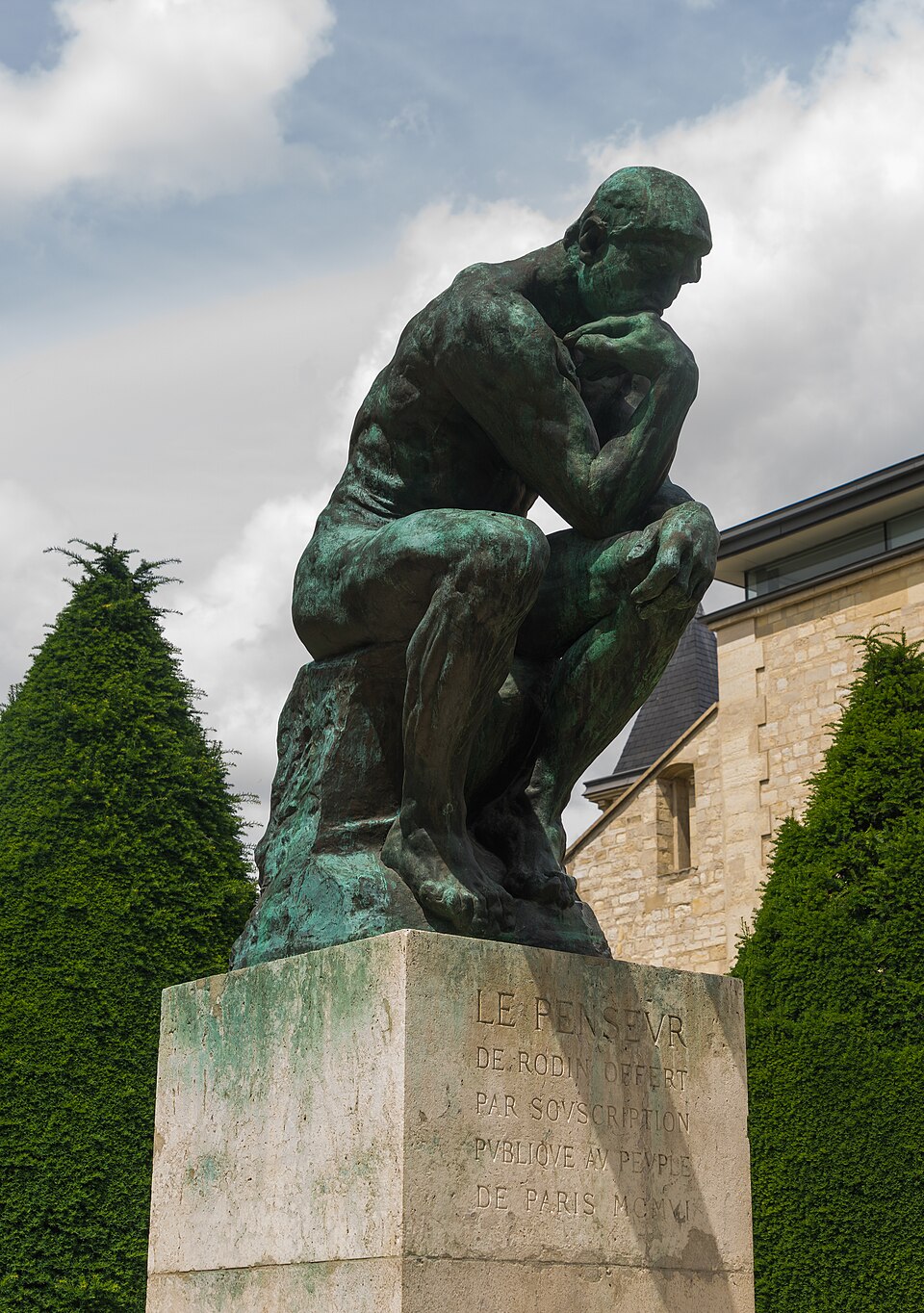
In the garden, facing the façade. This nude man, absorbed in deep meditation—originally created for *The Gates of Hell*—has become a universal figure and the museum’s emblem.
2. The Kiss
In the galleries. This couple, entwined and carved from marble of remarkable softness, is one of the most beautiful depictions of love in the entire history of art.
3. The Gate of Hell
In the garden. A life’s work: a monumental bronze gate inspired by Dante, teeming with tormented figures, from which many of his famous sculptures were derived.
4. The Burghers of Calais
In the garden. Six dignitaries walking toward the sacrifice, each face expressing fear, resignation, and dignity, in a monument of deeply moving humanity.
5. The Balzac Monument
One of his most daring works: the massive writer, wrapped in a loose-fitting dressing gown, whose bold form caused a scandal and paved the way for modern sculpture.
The Rodin Museum’s collection is incredibly rich: thousands of sculptures, thousands of drawings, not to mention the photographs and the artist’s personal collection. Here are the masterpieces you won’t want to miss, located between the garden and the museum’s galleries.
*The Thinker* is the museum’s iconic work and one of the most famous sculptures in the world. This naked man, seated with his chin resting on his hand and absorbed in deep thought, embodies thought in action, the effort of the mind. Originally conceived to crown *The Gates of Hell*, it has become a universal figure. It can be admired as it stands in the garden, facing the façade of the Hôtel Biron, in a striking dialogue between sculpture and architecture.
*The Kiss* is the other must-see masterpiece, one of the most beautiful depictions of love in the entire history of art. This entwined couple, carved from marble of remarkable softness, exudes a deeply moving sensuality and tenderness. Rodin, who had originally intended it for *The Gates of Hell*, removed it from the work, deeming its gentleness incompatible with the torment of the overall composition. The marble sculpture, on display in the galleries, beautifully captures the light.
The Gates of Hell is a life’s work, the grand project on which Rodin labored for decades. This monumental bronze gate, inspired by Dante’s *Divine Comedy*, teems with tormented figures, entwined or suffering bodies—a striking vision of humanity. Many of Rodin’s famous sculptures, including *The Thinker* and *The Kiss*, originated from this work. It can be admired in the garden, in all its dramatic power.
The Burghers of Calais is one of Rodin’s most poignant works. It depicts six prominent citizens of the city of Calais who, during the Hundred Years’ War, offered themselves as sacrifices to save their fellow citizens. Rodin depicts them marching toward their deaths, each face expressing a deeply moving mixture of fear, resignation, and dignity. This monument, imbued with intense humanity, breaks with the heroic tradition of commemorative sculpture.
The Monument to Balzac is one of Rodin’s most daring and modern works. This massive figure of the writer, wrapped in a loose dressing gown and captured in a powerful pose, caused a scandal upon its creation due to its formal audacity. Today, it is recognized as a decisive milestone on the path to modern sculpture.
The figures and fragments—hands, torsos, studies—reveal Rodin’s approach, for whom a fragment could be a work in its own right. Works such as *La Cathédrale*, in which two hands come together in a gesture of infinite delicacy, bear witness to this poetics of the fragment and the unfinished.
Camille Claudel’s works enrich the collection with their essential presence. As Rodin’s student, collaborator, and partner—and a sculptor of genius—she is represented in the museum by several of her works, which offer visitors the opportunity to discover or rediscover this major artist, who long remained in the shadows.
Finally, Rodin’s personal collection holds a wonderful surprise: the sculptor was also a collector, and he owned paintings by masters he admired, including works by Van Gogh, Monet, and Renoir. These paintings, on display at the museum, shed light on Rodin’s tastes and affinities and offer an unexpected dialogue between the sculpture and painting of his time.
History of the Building
The museum is housed in the Hôtel Biron, one of the most elegant mansions in Paris, whose history is closely linked to that of Rodin. This exceptional setting is an integral part of the visitor experience.
The Hôtel Biron was built in the early 18th century, during the Regency period, by the architect Jean Aubert, who also designed the grand stables at Chantilly. It is a fine example of the aristocratic architecture of that era: a harmonious main building with ornately decorated salons opening onto a vast garden. Over time, the building changed hands and uses; notably, it housed a religious congregation and later became a place where studios and living quarters were rented out to artists, in a somewhat bohemian atmosphere.
As a result, several artists stayed there in the early 20th century, including Auguste Rodin, who settled there in 1908. The sculptor, then at the height of his fame, fell in love with the place, its stately rooms, and its overgrown, romantic, and untamed garden. He set up his studio there and displayed some of his works. The Hôtel Biron became the setting for his final creative years, until his death in 1917.
It was during this period that Rodin conceived the plan that would save the site and ensure its legacy: to bequeath his entire body of work—sculptures, drawings, his personal collection, his archives, and his rights—to the French government, on the condition that the Hôtel Biron be dedicated to him and transformed into a museum. The government accepted this exceptional bequest. The Rodin Museum opened its doors in 1919, two years after the artist’s death. Since then, it has kept the sculptor’s memory alive in the very place where he worked, offering visitors one of the most moving and cohesive collections imaginable—the work of a master, in his own home.
How to Visit
The Rodin Museum consists of two complementary parts: the Hôtel Biron, where the marble sculptures, plaster casts, drawings, and the artist’s personal collection are on display, and the vast three-hectare garden, where the large bronze sculptures are situated. The ideal visit combines both, depending on the time of day and the weather.
Plan on about two hours for a full tour, or more if you’d like to stroll through the garden. The garden, laid out around a pond and a rose garden, is one of the most pleasant in Paris; you can even enter at a reduced rate just to take a walk among the sculptures. In the spring and summer, the garden in full bloom offers an enchanting setting; on overcast days, it’s best to start with the interior.
To enjoy the peace and quiet, visit in the morning as soon as it opens, especially on weekdays. Online reservations are recommended, especially on weekends, holidays, and beautiful sunny days, when the garden is very popular with both Parisians and visitors. A café nestled in the garden is the perfect spot to take a break while admiring the bronze sculptures.
Practical FAQ
What are the Rodin Museum’s hours?
The museum is open Tuesday through Sunday, from 10:00 a.m. to 6:30 p.m. (last admission around 5:45 p.m.; visitors must leave the garden starting at 5:30 p.m.). It is closed on Mondays, as well as on January 1, May 1, and December 25.
How much is the admission fee?
A ticket granting access to the museum and the garden costs about 14 € at full price. A reduced-price ticket, around 5 €, grants access to the garden only. Admission is free for visitors under 18, for those under 26 who are residents of the European Union, and for everyone on the first Sunday of the month during the winter season.
Where is the Rodin Museum located?
The museum is located at 77 Rue de Varenne, in the 7th arrondissement, near Les Invalides. The nearest metro station is Varenne; Les Invalides and Saint-François-Xavier are also nearby.
Can we just visit the garden?
Yes, there is a special ticket that grants access only to the sculpture garden at a reduced rate. It’s an ideal option for a stroll among the bronze sculptures, especially in the spring.
Do I need to make a reservation in advance?
We recommend booking a time slot online, especially on weekends, holidays, and sunny days, when it gets very busy.
Is the museum included in the Paris Museum Pass?
Yes, admission to the Rodin Museum is included in the Paris Museum Pass.
How much time should I set aside for the visit?
Allow about two hours to explore the Hôtel Biron and the garden at a leisurely pace; allow more time if you’d like to linger in the park.
Is the museum suitable for children?
Yes, the spacious garden, where visitors can stroll freely among the sculptures, is well-suited for a family outing, offering children a pleasant space and an accessible introduction to sculpture.
Around the Museum
The Rodin Museum is located in the 7th arrondissement, one of the most prestigious neighborhoods in Paris, rich in monuments and places to stroll. A visit to the museum is the perfect way to explore this iconic part of the capital.
Right nearby stands Les Invalides, with its gilded dome and Napoleon’s tomb, as well as the Army Museum. Not far away, the Eiffel Tower and the Champ de Mars offer one of the most beautiful views of Paris. This elegant and peaceful neighborhood invites you to take a leisurely stroll among its beautiful buildings, government ministries, and gardens.
Sculpture enthusiasts can extend their journey by exploring other venues in Paris dedicated to this art form. The Rodin Museum naturally complements the work of artists who were close to the master, particularly his collaborators and students, some of whom went on to become great sculptors in their own right. It’s a wonderful way to continue exploring modern sculpture, of which Rodin was the founder and the starting point.
- Also worth visiting – The Musée de l’Orangerie
- Also worth checking out – The Musée d’Orsay
— M