The Carnavalet Museum — the whole history of Paris
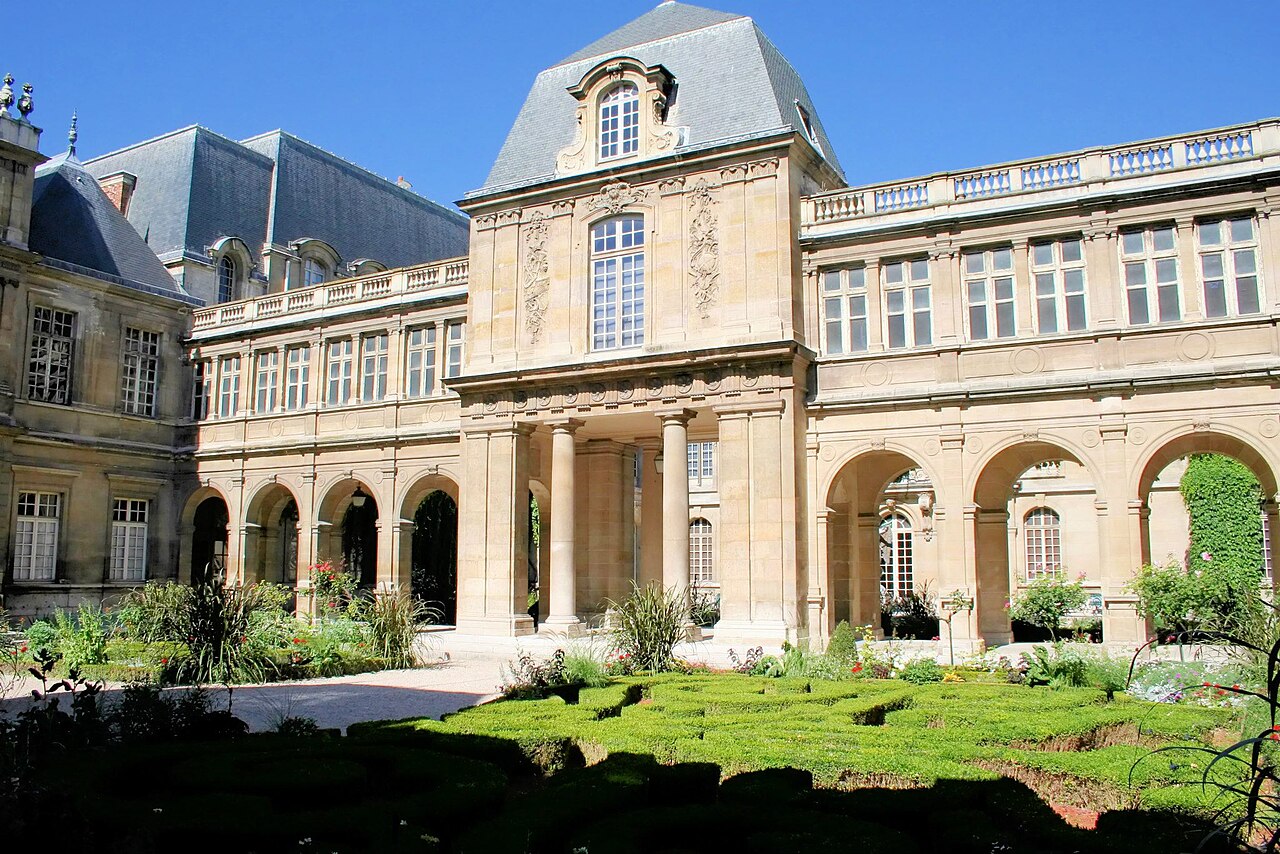
A canoe hollowed out of a tree trunk more than six thousand years ago, a model of the Bastille carved from a stone of the fortress itself, an eighteenth-century wine merchant’s sign, the Art Nouveau jewellery shop designed by Mucha, the bedroom where Marcel Proust wrote In Search of Lost Time: at the Carnavalet Museum, the whole history of Paris unfolds room after room, from prehistory to the present day.
Set in the heart of the Marais in two connected mansions, the Hôtel Carnavalet and the Hôtel Le Peletier de Saint-Fargeau, it is the oldest of the City of Paris museums. Its collections, among the richest in France, number some 625,000 objects: paintings, sculptures, models, shop signs, panelling, photographs, posters, historical mementoes and entire interiors dismantled and rebuilt exactly as they were.
Reopened in May 2021 after five years of work, the museum has been completely rethought. The route is now chronological and, for the first time, runs right up to the twenty-first century — and the permanent collections remain entirely free. It is one of the finest visits in Paris, and one of the few that costs nothing.
This guide covers the history of the buildings, how the route is organised, five works not to miss and all the practical information you need to plan your visit.
The Carnavalet Museum at a glance
| Address | 23 rue Madame-de-Sévigné, 75003 Paris (Marais) |
| Subway | Saint-Paul (line 1), Chemin Vert (line 8) |
| Hours | Tue-Sun 10am-6pm, closed Monday |
| Rates | Free permanent collections — temporary exhibitions require an admission fee |
| Official Website | carnavalet.paris.fr |
History — a Renaissance mansion turned museum of Paris
The Hôtel Carnavalet is one of the oldest mansions in the Marais. It was built around 1548-1560 for Jacques des Ligneris, a president of the Paris Parlement, in the Renaissance style. Its design is attributed to Pierre Lescot, architect of Henri II’s Louvre, and its sculpture to the workshop of Jean Goujon: the reliefs of the Seasons adorning the main courtyard are among the finest carved decorations of the Parisian Renaissance.
Its name comes from a sixteenth-century owner, the widow of the Breton nobleman François de Kernevenoy, whose surname Parisians gradually twisted into “Carnavalet”. In the seventeenth century the architect François Mansart remodelled the building and gave it much of its present appearance.
But the mansion owes its fame to its most illustrious tenant: the Marquise de Sévigné, who lived there from 1677 until her death in 1696. It was from here that she wrote many of her letters to her daughter, a masterpiece of epistolary literature and an irreplaceable chronicle of life under Louis XIV. The museum honours her in several rooms and in its very address, the street that now bears her name.
In 1866, at the urging of Baron Haussmann, the City of Paris bought the mansion to house a museum of its history. The timing was no accident: the great works of the period were sweeping away whole districts of old Paris, and their memory had to be preserved. The museum officially opened in 1880. A century later it expanded into the neighbouring Hôtel Le Peletier de Saint-Fargeau, opened to the public in 1989 for the bicentenary of the Revolution.
A museum completely rethought
Closed in 2016, the museum reopened in May 2021 after a major renovation. The old route, labyrinthine and incomplete, has given way to a clear, chronological visit.
Visitors now begin in the basement, with prehistory and antiquity, in the old vaulted cellars: this is where the Neolithic canoes from Bercy and the remains of Lutetia are displayed. They then move forward through time room by room, from the Middle Ages to the Renaissance, from the Grand Siècle to the Enlightenment, from the Revolution to the Second Empire, up to the galleries devoted to the twentieth and twenty-first centuries, which did not exist before the works.
The renovation has also made the museum more accessible and more lively. Works are hung at a height designed for everyone, tactile displays and Braille transcripts punctuate the route, and children are given a large place. The forty rooms of historic interiors — panelling, painted ceilings, reassembled salons — have been restored to their full splendour.
Above all, the museum has kept what gives it its charm: the feeling of passing not through a fine-arts museum, but through the memory of a city. Masterpieces sit beside everyday objects, shop signs beside court portraits, relics of the Revolution beside cabaret posters. Carnavalet tells the story of Paris through its inhabitants as much as through its monuments.
The route, century by century
The museum’s richness lies in the diversity of its collections, which cover more than six millennia of Parisian history.
The first rooms deal with origins. The Bercy canoes are joined by Gallic and Gallo-Roman objects, witnesses to Lutetia, the town that grew up around the Île de la Cité. The Middle Ages and the Renaissance are evoked through sculpture, stained glass and old maps that trace the city’s growth.
The Grand Siècle and the eighteenth century occupy the most sumptuous rooms. Here you can admire complete interiors from vanished mansions, portraits, views of Paris and the famous collection of shop signs: the panels of wrought iron and painted wood that once marked shops and inns, in the days before streets had numbers. In the main courtyard stands Antoine Coysevox’s bronze statue of Louis XIV, one of the few royal statues in Paris to have escaped destruction during the Revolution.
The French Revolution is one of the museum’s great strengths, with one of the most important collections in the world on the period: models of the Bastille, portraits of the leading figures, objects belonging to the royal family during their imprisonment in the Temple, relics of the Terror. The nineteenth century follows, with Haussmann’s transformations, the Commune and the Belle Époque, through to Art Nouveau and Art Deco interiors. The route ends with contemporary Paris, in photographs, posters and objects from recent decades.
Must-See Works
Among the museum’s 625,000 objects, here are five highlights. All are in the public domain and may be freely reproduced.
1. The Georges Fouquet jewellery shop — Alphonse Mucha (1901)
Commissioned by the jeweller of the rue Royale, this shop designed in its entirety by the master of Art Nouveau — façade, display cases, furniture, peacocks and mosaics — was dismantled and reassembled piece by piece at the museum. It is one of the finest Art Nouveau ensembles preserved in Paris.
2. Marcel Proust’s bedroom
The bed, furniture and belongings from the Boulevard Haussmann bedroom where the reclusive, ailing writer composed much of In Search of Lost Time. A modest and moving room, where one seems to sense the silence of his nights of work.
3. The ballroom of the Hôtel de Wendel — José Maria Sert (1924)
A spectacular décor in gold and sepia, peopled with elephants, processions and fantastical figures, created for a great family of industrialists: one of the most dazzling decorative schemes of the Roaring Twenties.
4. The model of the Bastille (1790)
After the fall of the fortress, the contractor Pierre-François Palloy, in charge of demolishing it, had models carved from its stones and sent them to the French departments as souvenirs of liberty won. Carnavalet holds one of these objects, at once relics and the first souvenirs in history.
5. The Neolithic canoes from Bercy
Discovered in 1991 during building work in the Bercy district, these boats hollowed out of oak trunks are among the oldest known in Europe. They are a reminder that, millennia before Lutetia, people were already navigating the Seine.
How to visit the Carnavalet Museum
The museum is large, but a visit remains pleasant and easy to plan. Always check the latest information on the official website before you go.
Duration of the visit
Allow two hours for an unhurried complete tour, one hour if you focus on a few rooms — the Revolution, the Art Nouveau interiors and Proust’s bedroom, for example. Lovers of Paris will happily spend half a day here.
Opening hours
The museum is open Tuesday to Sunday, 10am to 6pm. The exhibition ticket office closes at 5.15pm. It is closed on Mondays and on 1 January, 1 May and 25 December.
Admission
The permanent collections are free, with no booking required. Only temporary exhibitions are ticketed; booking online guarantees entry. Admission is free for disabled visitors and one companion.
When to Visit
The museum is quieter on weekdays and in the morning. At weekends, especially Sundays, it is busier, as the Marais draws many strollers. Bags are checked at the entrance; suitcases and large luggage are not allowed.
Accessibility
The museum is accessible to visitors with reduced mobility, with wheelchairs available on site. The route offers tactile displays, Braille transcripts and adapted hanging heights.
Catering
The museum has a restaurant, Joli, for a break during or after your visit.
Practical FAQ
Is the Carnavalet Museum free?
Yes, the permanent collections are free and require no booking. Only temporary exhibitions are ticketed.
Where is the Carnavalet Museum?
At 23 rue Madame-de-Sévigné, in the 3rd arrondissement, in the heart of the Marais. The nearest metro stations are Saint-Paul (line 1) and Chemin Vert (line 8).
What are the Carnavalet Museum’s opening hours?
Tuesday to Sunday, 10am to 6pm. The museum is closed on Mondays and on 1 January, 1 May and 25 December.
How long does it take to visit Carnavalet?
Allow about two hours for a complete tour, one hour for a focused visit.
What should I see at the Carnavalet Museum?
Highlights include the Fouquet shop designed by Mucha, Marcel Proust’s bedroom, the Hôtel de Wendel ballroom, the model of the Bastille and the Neolithic canoes from Bercy.
Around the Museum
Carnavalet lies in the heart of the Marais, one of the richest districts in Paris for historic architecture. A short walk away, the Place des Vosges, the oldest royal square in the city, spreads its arcades of brick and stone; Victor Hugo’s house, where the writer lived, can be visited free of charge.
Also close by, the Musée Cognacq-Jay presents eighteenth-century art in another mansion, and the Musée Picasso occupies the magnificent Hôtel Salé, a few minutes’ walk away. The rue des Francs-Bourgeois, with its shops and historic mansions, links these addresses in an ideal stroll.
Further south, the rue Saint-Antoine leads to the church of Saint-Paul-Saint-Louis and the Place de la Bastille, where you can look for the outline of the old fortress traced on the ground — one of whose stones, carved into a model, was waiting for you at the museum.
Further Reading
Institutional Documentation
- Musée Carnavalet — official website — opening hours, exhibitions and practical information.
- Paris Musées Collections — the online collections of the City of Paris museums.
See also on Hors Cadre
- The Picasso Museum
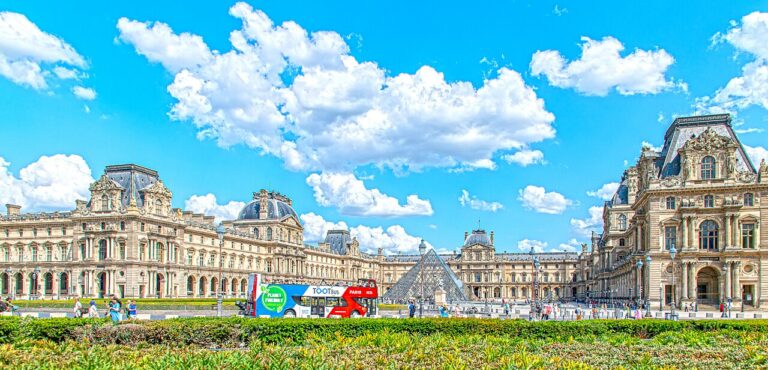
- The Louvre Museum — the palace of Pierre Lescot, the architect to whom the Hôtel Carnavalet is also attributed.
— M