Cluny Museum — The Middle Ages and *The Lady and the Unicorn*
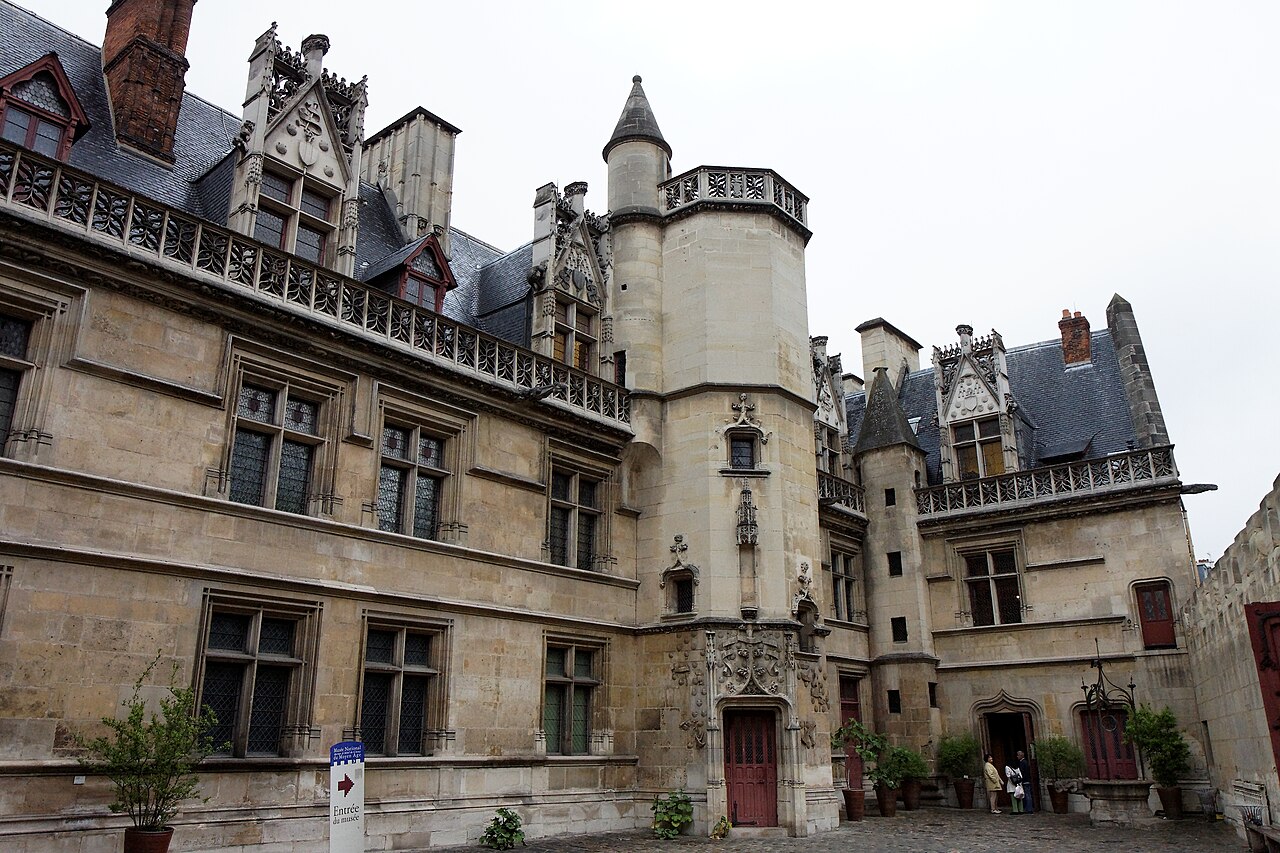
In the heart of the Latin Quarter, a medieval castle built against ancient Roman baths houses one of the most enchanting museums in Paris: the Musée de Cluny, the National Museum of the Middle Ages. As the only French national museum entirely dedicated to this period, it invites visitors on a thousand-year journey through art and history, set within an architectural setting unique to the capital.
Its collection showcases the treasures of medieval art: sculptures, stained-glass windows, gold and silverwork, enamels, ivories, and above all the famous ” Lady and the Unicorn” tapestries, one of the most admired and enigmatic masterpieces of the Middle Ages. These works, displayed in an exceptional setting—the ruins of the Gallo-Roman baths and the abbots’ residence of Cluny—offer a striking immersion into a millennium of artistic creation.
Completely renovated and reopened in 2022, the museum now offers a clear, bright, and accessible visitor experience that has revitalized the museum visit. On a human scale and far from the crowds of larger institutions, it captivates visitors with its intimate atmosphere and the richness of its collections. This article guides you through its history, its masterpieces, and everything you need to know to plan your visit.
The Cluny Museum at a Glance
| Address | 6 Place Paul Painlevé, 75005 Paris (Latin Quarter) |
| Subway | Cluny – La Sorbonne (10), Saint-Michel (4), or Odéon (4, 10) |
| Hours | Tue–Sun 9:30 a.m.–6:15 p.m., late-night hours on select Thursdays, closed Mondays |
| Rates | ~€12 full price / ~€10 reduced price — free for those under 18, EU citizens aged 18–25, and on the first Sunday of the month |
| Official Website | musee-moyenage.fr |
Must-See Works
The exhibition, which was completely renovated in 2022, traces a journey through the centuries, from Roman antiquity to the end of the Middle Ages. The medieval works are in the public domain.
1. The Lady and the Unicorn
The museum’s crown jewel: six tapestries from the late 15th century, displayed in a special exhibition room. Five of them depict the five senses; the sixth bears the enigmatic inscription “To My Only Desire.”
2. The Heads of the Kings of Judah
The monumental sculptures torn from the facade of Notre-Dame de Paris during the Revolution, long lost and then rediscovered, bear witness to the splendor of Gothic art.
3. The stained-glass windows of the Sainte-Chapelle
A collection of vibrantly colored stained-glass windows that allows visitors to admire up close a form of art that is usually seen only from a distance.
4. The Golden Rose and Limoges Enamels
Masterpieces of medieval metalwork, including Limousin enamels renowned throughout Europe for their brilliance.
5. The frigidarium of the Gallo-Roman baths
More than just a work of art, it is a place: the cold room of the ancient baths, with its intact vault spanning more than fourteen meters, is one of the most significant Roman ruins in Paris.
The Cluny Museum’s collection includes tens of thousands of works, several thousand of which are on display, offering an exceptional overview of medieval art, from Late Antiquity to the Renaissance. Here are the masterpieces you won’t want to miss.
“The Lady and the Unicorn ” is the museum’s signature work and one of the most famous pieces from the Middle Ages. This set of six tapestries, woven in the late 15th century, depicts a young woman accompanied by a unicorn and a lion in compositions of admirable beauty and delicacy, set against a red background dotted with flowers and animals. Five of the tapestries evoke the five senses; the sixth, bearing the enigmatic inscription “To My Sole Desire,” has sparked countless interpretations. Displayed in a specially designed room—a true sanctuary of silence and poetry—this mysterious work is one of the pinnacles of tapestry art and the museum’s crown jewel.
The heads from the Gallery of Kings at Notre-Dame de Paris constitute a collection of exceptional historical and emotional value. These monumental sculptures once adorned the cathedral’s façade; torn down and decapitated during the Revolution, they were lost for many years before being rediscovered and preserved in the museum. They bear witness to the splendor of Gothic sculpture and the turbulent fate of medieval heritage.
The stained-glass windows are among the museum’s most beautiful displays, notably featuring panels from the Sainte-Chapelle, a masterpiece of Parisian Gothic architecture. These vibrantly colored stained-glass windows allow visitors to admire up close an art form that is usually seen only from a distance, and reveal the full mastery of the medieval glassmakers.
Goldsmithing and enamels are among the museum’s treasures, featuring pieces of remarkable richness, including the famous golden rose, a masterpiece of medieval goldsmithing, and an exceptional collection of Limoges enamels, renowned throughout medieval Europe for their quality and brilliance.
Sculptures, ivory carvings, furniture, and everyday objects round out this overview, offering a glimpse into all aspects of art and life in the Middle Ages—religious and secular art, major works, and everyday objects.
Finally, the archaeological site itself—with the frigidarium of the Gallo-Roman baths and its monumental vault—is a work of art in its own right, an impressive ancient ruin that visitors explore throughout their tour.
History of the Building
The Cluny Museum is located on one of the most extraordinary sites in Paris, where nearly two thousand years of history are layered one upon another. The place itself is a journey through time, bringing together Roman antiquity and the Middle Ages.
First and foremost, the site preserves the remains of Gallo-Roman baths, built at the end of the 1st century CE. These public baths were among the most important in the Roman city of Lutetia, the predecessor of Paris. Remarkable ruins remain, notably the frigidarium—the cold room—whose intact vault rises more than fourteen meters high. It is one of the most significant examples of antiquity preserved in Paris and one of the few monumental Roman ruins visible in the capital, offering a striking testament to ancient Lutetia.
Beginning in 1485, the Hôtel des Abbés de Cluny—the Parisian residence of the powerful abbots of the Burgundian monastery of Cluny—was built on and around these ancient thermal baths. This late 15th-century mansion is a jewel of Flamboyant Gothic architecture and one of only two surviving medieval civilian residences in Paris. With its courtyard, turrets, and sculpted decorations, it bears witness to the refinement of late medieval architecture. This juxtaposition of the Roman baths and the medieval mansion makes the site a unique architectural ensemble.
The museum itself was founded in the 19th century. As early as the 1830s, a passionate art lover, Alexandre du Sommerard, displayed his extensive collection of medieval artifacts at the Hôtel de Cluny. Upon his death, the French government acquired the collection and the building, and the national museum was established in 1843. Since then, the collection has continued to grow. A contemporary extension has been added to the site, and, most importantly, major modernization efforts have enabled the museum to fully reopen in 2022, featuring a new visitor center and a redesigned exhibition layout, conceived with accessibility for all in mind. The museum thus combines the historical richness of the site with the comfort of modern museum design.
How to Visit
Since its renovation, the Cluny Museum has offered a clear and seamless chronological tour that traces the passage of centuries, from Roman antiquity to the end of the Middle Ages. This layout, which replaced the former, more labyrinthine layout, makes for an educational and enjoyable visit that is accessible to all visitors.
One of the museum’s charms is its manageable size: you can see the entire collection in an hour and a half to two hours, in an intimate and peaceful atmosphere, far from the crowds of the very large museums. It’s the perfect place for an in-depth visit without feeling rushed, where you can take the time to admire the artworks—especially the room featuring *La Dame à la licorne*, where you could easily spend hours.
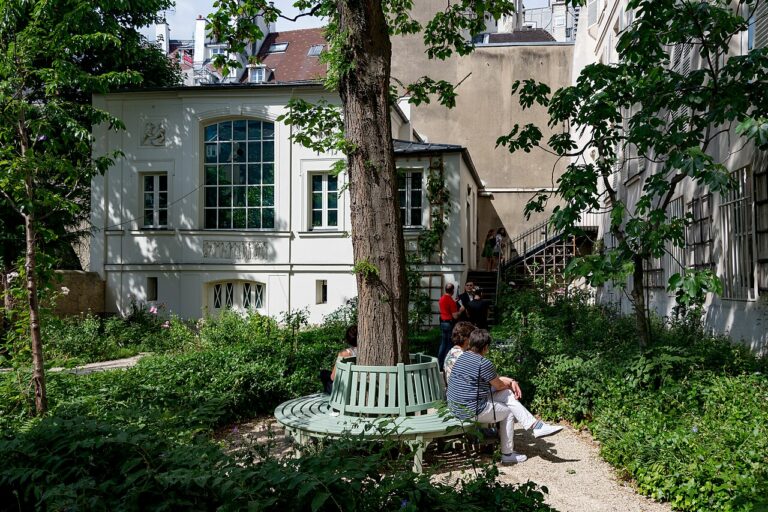
A stroll between the Gallo-Roman baths and the medieval hotel offers a unique architectural experience in Paris. The museum also features a medieval-inspired garden, perfect for taking a break. Accessible and family-friendly, the museum offers exhibits tailored to young visitors. To enjoy the peaceful atmosphere, visit in the morning or during the evening openings held on select Thursdays each month, which have a particularly enchanting ambiance.
Practical FAQ
What are the opening hours of the Cluny Museum?
The museum is open Tuesday through Sunday, from 9:30 a.m. to 6:15 p.m. (ticket office closes around 5:30 p.m.). Late-night hours are offered until 9:00 p.m. on select Thursdays each month. It is closed on Mondays, as well as on January 1, May 1, and December 25.
How much is the admission fee?
The full price is about €12, and the reduced price is about €10. Admission is free for visitors under 18, European Union citizens aged 18 to 25, and for everyone on the first Sunday of the month. The Paris Museum Pass is accepted.
Where is the Cluny Museum located?
The museum is located at 6 Place Paul Painlevé, in the 5th arrondissement, in the heart of the Latin Quarter. The closest metro stations are Cluny–La Sorbonne (Line 10), Saint-Michel (Line 4), and Odéon (Lines 4 and 10).
What is *The Lady and the Unicorn*?
It is the museum’s most famous work: a set of six tapestries from the late 15th century, depicting a lady, a unicorn, and a lion. Five of them symbolize the five senses, while the sixth bears the inscription “To My Only Desire.” It is one of the most admired masterpieces of the Middle Ages.
How much time should I set aside for the visit?
Allow about an hour and a half to two hours for a complete tour. The museum is a manageable size, so you can enjoy exploring it at a leisurely pace.
Do I need to make a reservation in advance?
Online reservations are recommended, especially during peak times and when temporary exhibitions are on, even though the museum is less crowded than the very large museums in Paris.
Can we see the Roman baths?
Yes, the ruins of the Gallo-Roman baths—including the spectacular frigidarium with its 14-meter vault—are an integral part of the tour. They are also partially visible from the adjacent streets.
Around the Museum
The Cluny Museum is located in the heart of the Latin Quarter, one of the oldest and liveliest neighborhoods in Paris, rich in history, culture, and places to explore. A visit to the museum is the perfect way to discover this iconic neighborhood on the Left Bank.
In the immediate vicinity are the Sorbonne, a prestigious and historic university, and numerous sites steeped in history. The Sainte-Chapelle, a jewel of Parisian Gothic architecture whose stained-glass windows are housed in the museum, as well as Notre-Dame Cathedral, from which some of the museum’s sculptures originate, are both nearby on the Île de la Cité. The Boulevard Saint-Michel and the streets of the Latin Quarter, with their bookstores, cafés, and movie theaters, invite you to take a leisurely stroll.
Art and history enthusiasts can continue their journey by exploring the treasures of the Left Bank and the Île de la Cité. The Latin Quarter, the intellectual and historic heart of Paris since the Middle Ages, offers the perfect setting to continue the journey through time that began at the Cluny Museum. A day spent in this neighborhood, surrounded by medieval art, history, and a lively student atmosphere, is one of the best ways to discover historic Paris.
- Also worth exploring – The Louis Vuitton Foundation
- Also worth checking out – The Musée d’Orsay
— M