Delacroix Museum — The Romantic Master’s Studio in Saint-Germain-des-Prés
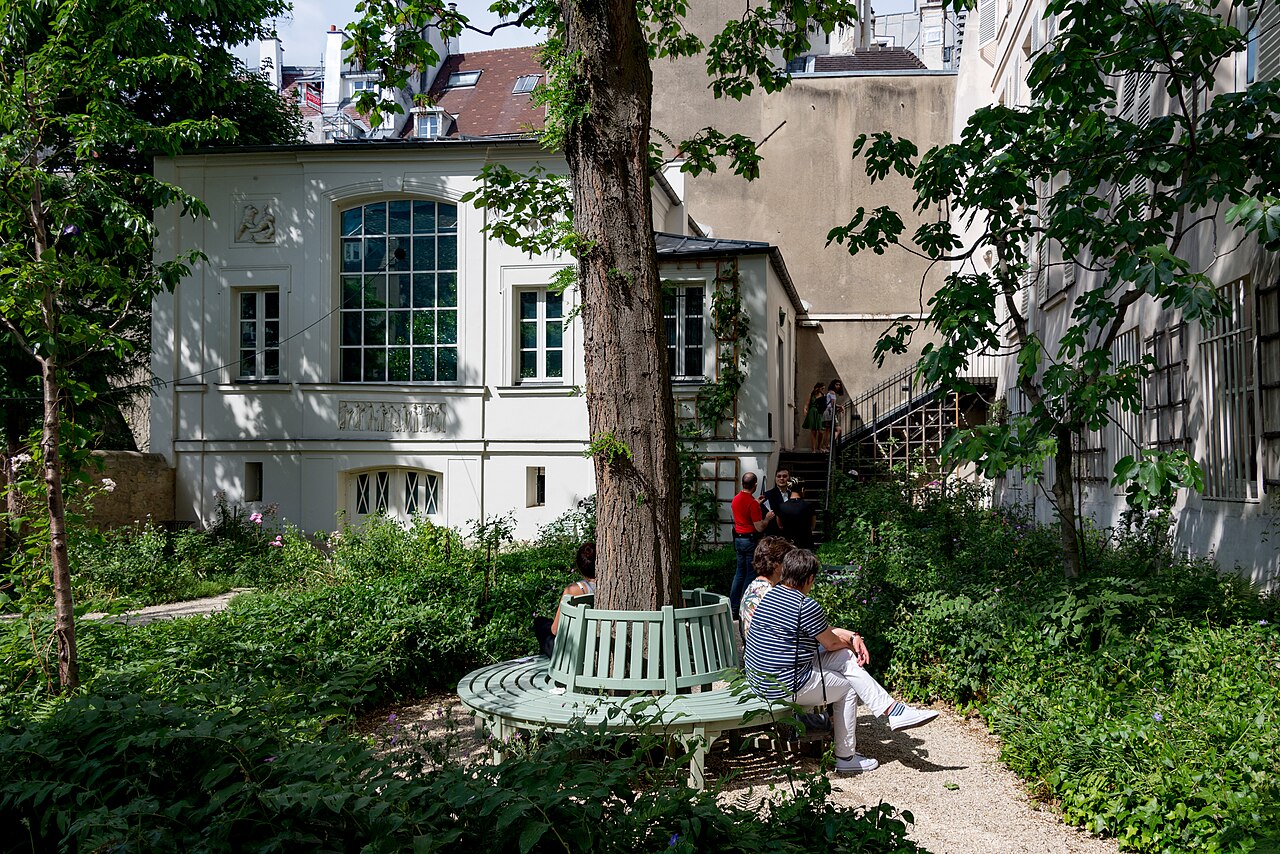
In the heart of Saint-Germain-des-Prés, on one of Paris’s most romantic squares, lies a museum of rare charm: the Eugène Delacroix National Museum. Housed in the last apartment and studio where the great Romantic painter lived and died, this intimate setting offers a unique glimpse into the world of one of the greatest French artists of the 19th century.
Here, there are no vast galleries or crowds: just an apartment, a studio, and a secret garden, where visitors can discover Delacroix in his private life, getting a close-up look at his daily existence and his creative process. Paintings, sketches, pastels, letters, and personal belongings reveal the private man behind the public painter of grand scenes and the masterpieces of the Louvre. It’s a unique, sensitive, and moving experience that appeals to art lovers as well as passersby seeking a peaceful spot.
Saved from destruction in the early 20th century by admiring artists, later designated a national museum, and eventually incorporated into the Louvre, this museum-studio preserves the legacy of Delacroix in the very setting where he worked during his final years. This article guides you through its history, its collection, its atmosphere, and everything you need to know to plan your visit.
The Eugène Delacroix National Museum at a Glance
| Address | 6 rue de Furstemberg, 75006 Paris (Saint-Germain-des-Prés) |
| Subway | Saint-Germain-des-Prés (Line 4) or Mabillon (Line 10) |
| Hours | Every day except Tuesday, ~9:30 a.m.–5:30 p.m., closed on Tuesdays |
| Rates | ~€9 — combined Louvre-Delacroix ticket ~€22, free admission with a Louvre ticket |
| Official Website | musee-delacroix.fr |
Must-See Works
An intimate museum-studio, it showcases the work of Eugène Delacroix in a more personal setting—his major masterpieces are housed at the nearby Louvre. Since Delacroix’s works are in the public domain, they may be freely reproduced.
1. Madeleine in the Desert
The face of a saint, with a poignantly gentle expression, that inspired the poet Baudelaire, a great admirer of Delacroix.
2. The Education of the Virgin
Painted during a stay at the home of her friend, the writer George Sand, in Nohant, this work is imbued with tenderness.
3. Romeo and Juliet at the Capulet Tomb
A testament to his taste for literary and dramatic themes, which were dear to the Romantic movement.
4. Memories of the Trip to Morocco
Works and objects brought back from his 1832 trip to North Africa—a revelation of light and color that left an indelible mark on his entire body of work.
5. The Workshop in the Garden
More than just a work of art, it is a place: the vast, light-filled studio opening onto the garden, where Delacroix created his final works, is imbued with a special emotion.
The Delacroix Museum’s collection, much like the museum itself, is intimate and precious. It does not feature the massive canvases used for grand decorative murals—those are at the Louvre or in public buildings—but rather a collection of works and objects that reveal the artist’s private life and creative process. Here are the must-see highlights.
The paintings on display at the museum offer a glimpse into Delacroix’s art in a more intimate vein than that of his large-scale compositions. Visitors can admire works such as *Magdalene in the Desert*, which inspired the poet Baudelaire, a great admirer of the painter, *The Education of the Virgin*, painted during a stay with his friend, the writer George Sand; and *Romeo and Juliet at the Capulet Tomb*, which attests to his fondness for literary and dramatic subjects.
The sketches and studies reveal Delacroix’s creative process, his way of working, and how he prepared his compositions. These works, often characterized by great freedom and freshness, show the artist at work in the privacy of his studio, exploring, experimenting, and refining his ideas. They offer a valuable glimpse into the genesis of his art.
The pastels and drawings form a remarkable collection, revealing Delacroix’s mastery of these techniques and his sense of color and light. These works on paper, which are more fragile, are displayed on a rotating basis and demonstrate the breadth of his talent beyond oil painting.
Memories of his trip to Morocco hold a special place in his heart. Delacroix’s 1832 trip to North Africa was a revelation that left a lasting mark on his art—the light, the colors, and the Eastern scenes. The museum houses works and mementos related to this defining journey, which continued to inspire his imagination until the end of his life.
Letters, personal items, and mementos offer visitors a glimpse into the man’s private life: his correspondence, his personal belongings, photographs of his loved ones, and documents chronicling his life and friendships. These items, rarely displayed in major museums, are what make this place so special, offering a glimpse of the man behind the artist.
Finally, the studio itself is one of the museum’s “must-see” attractions: this vast, light-filled space, opening onto the garden, where Delacroix created his final works, is a place of special emotion, where one can sense the painter’s presence. To see his most famous masterpieces—such as *Liberty Leading the People* or *The Death of Sardanapalus* —you’ll need to visit the nearby Louvre Museum, to which this studio-museum is the perfect complement.
History of the Building
The Delacroix Museum is inextricably linked to the painter’s personal history and the struggle to preserve this place steeped in memory. Understanding how this studio became a museum means understanding the deep attachment that Delacroix inspires.
Eugène Delacroix moved into this apartment on Rue de Furstemberg in 1857, toward the end of his life. He chose this location in part for its proximity to the nearby Saint-Sulpice Church, where he was then decorating the Chapel of the Holy Angels—one of his final great masterpieces. The painter had a bright, spacious studio built in the garden, suited to the scale of his work. It was there that he lived and created during his final years, until his death, which occurred in this apartment in 1863. The place thus bears the traces of his final creative moments.
After Delacroix’s death, the apartment and studio had various tenants, and the place gradually fell into obscurity. In the early 20th century, plans were even made to demolish it. That was when a group of admiring artists rallied to save it. In 1929, largely on the initiative of the painter Maurice Denis and Paul Signac, the Society of Friends of Eugène Delacroix was founded, with the goal of preventing the studio from disappearing and raising awareness of the master’s work. Maurice Denis first rented and then purchased the premises, where he held exhibitions and assembled a collection in homage to the painter.
Thanks to this effort, the site was saved and its role as a place of remembrance secured. In 1954, the Society donated the collections and the premises to the government, with the aim of turning them into a museum. The Eugène Delacroix Museum became a national museum in 1971. Since 2004, it has been affiliated with the Louvre Museum, a public institution, creating a special connection between the small museum-studio in Saint-Germain-des-Prés and the grand museum that houses the painter’s most famous masterpieces. Thus, the studio where Delacroix worked has become a living memorial, preserved thanks to the passion of his admirers.
How to Visit
The Delacroix Museum is a small museum that takes about an hour to visit. It is precisely this intimate setting that gives it its charm: far from the vastness and crowds of large museums, visitors can explore Delacroix’s world in a peaceful and contemplative atmosphere, perfect for reflection.
The tour leads through the apartment, where the artwork and mementos are displayed, and then to the studio in the garden, the moving heart of the place. The garden itself—a small, hidden oasis of greenery in the heart of the city—invites you to take a timeless break. Together, they create a place of great serenity, where art and intimacy come together.
A visit to the Delacroix Museum is best planned as a complement to a visit to the Louvre, which oversees it and houses its greatest masterpieces—in fact, a Louvre ticket grants access to the Delacroix Museum. To fully enjoy the peaceful atmosphere of the museum, a visit on a weekday is ideal. Please note that the museum, located in an old building, does not have air conditioning; it’s best to plan your visit accordingly during hot weather. The museum also offers activities, tours, and themed evenings that enhance the visitor experience.
Practical FAQ
What are the Delacroix Museum’s hours?
The museum is open every day except Tuesday. Hours are generally from 9:30 a.m. to 5:30 p.m. (subject to change depending on the day; the ticket office closes approximately 30 minutes before closing time). It is closed on Tuesdays, as well as on January 1, May 1, and December 25. Special evening events are offered depending on the schedule.
How much is the admission fee?
The full price is about €9. A combined Louvre-Delacroix ticket is available for around €22. In addition, admission to the Louvre Museum includes free entry to the Delacroix Museum on the same day or the next day the museum is open. Admission is free for visitors under 18 and for everyone on the first Sunday of the month.
Where is the Delacroix Museum located?
The museum is located at 6 Rue de Furstemberg, in the 6th arrondissement, in the heart of Saint-Germain-des-Prés, on the charming Place de Furstenberg. The nearest metro stations are Saint-Germain-des-Prés (Line 4) and Mabillon (Line 10).
Does a Louvre ticket grant access to the Delacroix Museum?
Yes, the Louvre admission ticket grants free admission to the Delacroix Museum on the day of your visit to the Louvre or the following day the museum is open, as the two museums are affiliated.
How much time should I set aside for the visit?
Since the museum is small, allow about an hour for a complete tour, including the workshop and the garden. It’s an ideal outing to combine with a stroll through the neighborhood.
Do I need to make a reservation in advance?
Reservations aren’t always necessary for this intimate museum, but they are recommended for specific activities (guided tours, evening events) and during busy periods.
Where can you see Delacroix’s greatest masterpieces?
Delacroix’s most famous large-scale paintings, such as *Liberty Leading the People* and *The Death of Sardanapalus*, are housed at the nearby Louvre Museum. His large-scale murals can be found, in particular, at the Church of Saint-Sulpice and in several public buildings in Paris.
Around the Museum
The Delacroix Museum enjoys an exceptional location in the heart of Saint-Germain-des-Prés, one of the most charming and literary neighborhoods in Paris. A visit to the museum is the perfect way to explore this legendary neighborhood on the Left Bank.
Place de Furstenberg, where the museum is located, is one of the most romantic squares in Paris, with its trees and streetlamps, and is a favorite spot for lovers and photographers. All around it, the Saint-Germain-des-Prés neighborhood reveals its treasures: the oldest church in Paris, the famous literary cafés, art galleries, boutiques, and bookstores, all set in an elegant and intellectual atmosphere. At the nearby Saint-Sulpice Church, visitors can admire the grand murals painted by Delacroix in the Chapel of the Holy Angels—an essential complement to a visit to the museum.
Art lovers can extend their tour by visiting the Louvre Museum, located just across the Seine, where Delacroix’s most famous masterpieces are housed. The Left Bank also offers other discoveries, from the Latin Quarter to Saint-Germain-des-Prés. A day in this neighborhood—spent exploring the intimacy of Delacroix’s studio, the literary atmosphere of Saint-Germain, and the surrounding artistic treasures—is one of the best ways to experience the soul of the Left Bank.
- Also worth checking out— The Grand Palais
- Also worth checking out – The Cluny Museum
— M