Marmottan Monet Museum — What to See, Hours, Tickets
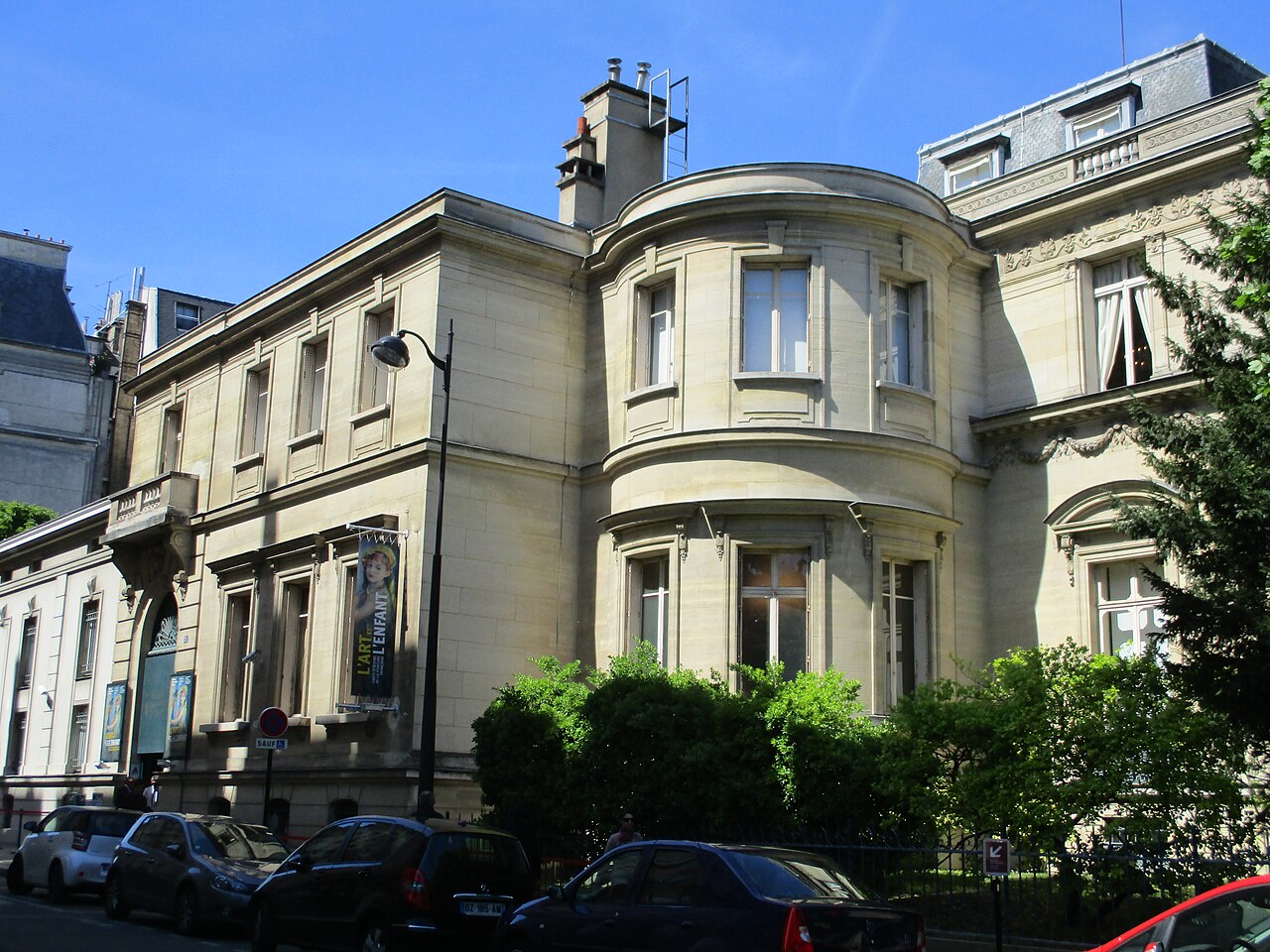
Onthe edge of the Bois de Boulogne, in the peaceful Ranelagh neighborhood (16th arrondissement of Paris), a former Empire-style mansion houses one of the world’s most valuable collections of Impressionist art. The Marmottan Monet Museum houses the world’s largest collection of works by Claude Monet —more than 100 paintings, includingthe iconic Impression, Sunrise (1872), the painting that gave its name to the Impressionist movement. It also houses the world’s largest collection of works by Berthe Morisot —more than 25 paintings and numerous drawings bequeathed by the painter’s descendants.
The museum has been open to the public since 1934, housed in a building steeped in history: the former hunting lodge of the 3rd Duke of Valmy, purchased in 1882 by the collector Jules Marmottan and converted into an Empire-style mansion by his son Paul Marmottan, an art historian, who bequeathed it tothe Académie des Beaux-Arts in 1932 along with his medieval, Renaissance, and First Empire collections. Successive bequests —Donop de Monchy in 1957, Michel Monet in 1966, Daniel Wildenstein in 1980, Nelly Duhem in 1985, Denis and Annie Rouart in 1993 —have gradually transformed this Empire-style museum into a Parisian temple of Impressionism.
This article serves as a guide to your visit to the Marmottan Monet Museum: the building’s history, must-see works, 2026 hours and admission prices, visitor tips, current exhibitions, frequently asked questions, and the surrounding area. Also worth noting is a remarkable episode in the museum’s history—the armed robbery on October 27, 1985, in which nine masterpieces (including *Impression, Sunrise*) were stolen from the institution before their dramatic recovery in Corsica five years later.
The Marmottan Monet Museum at a Glance
| Address | 2 Rue Louis Boilly, 75016 Paris |
| Subway | La Muette, Line 9 |
| Hours | Tue–Sun 10 a.m.–6 p.m., Thursday evenings until 9:00 p.m., closed Mondays |
| Rates | €14 at the door |
| Official Website | marmottan.fr |
The Story of a Hunting Lodge That Became a Mecca for Impressionism
The history of the Marmottan Monet Museum begins long before Impressionism. In the early 19th century, the building that now houses the museum was nothing more than a modest hunting lodge owned by François-Christophe-Edmond Kellermann, 3rd Duke of Valmy (1802–1868). The lodge, located on the edge of the Bois de Boulogne (which was then the hunting ground of the Parisian aristocracy), served as a meeting point for the game hunts that took place there regularly.
1882: The property was purchased by Jules Marmottan (1829–1883), a prosperous industrialist and businessman who was a passionate collector of medieval and Renaissance art. Jules Marmottan began transforming the modest country house into a more comfortable family home, but died the following year before seeing the work completed.
The building and the art collection passed to his only son, Paul Marmottan (1856–1932), an art historian specializing in the Napoleonic period and the First Empire. Paul Marmottan completely transformed the pavilion he inherited from his father. Heexpanded it in the Empire style, had new rooms built, redesigned the gardens, and installed his own collection there— Empire-style furniture, bronzes, 18th- and 19th-century paintings, and works of art gathered over thirty years of collecting. In Paris during the years 1900–1920, the residence became one of the capital’s great private mansions, comparable in style to the Jacquemart-André Museum (opened in 1913).
1932: Paul Marmottan, having no direct descendants, bequeathed the building, its collections, and its furnishings in his will tothe Académie des Beaux-Arts —an institution of which he had been a member since 1925. He stipulated that the building must be open to the public as a museum, in keeping with the organization and spirit he had instilled in his home.
1934: The Marmottan Museum officially opened to the public. The first decade was marked by modest attendance —at the time, the museum was a specialized Empire-style museum, devoted primarily to Paul Marmottan’s collections (Napoleonic furniture, objets d’art, and 18th- and 19th-century paintings).
The Impressionist era began in 1957 with the bequest from Victorine Donop de Monchy —daughter of Dr. Georges de Bellio, a physician and collector who was a friend of the Impressionists. Dr. de Bellio had treated Monet, Renoir, Pissarro, Sisley, and Manet, and had acquired several of their works directly in exchange for his medical care. The Donop de Monchy bequest includes, notably, *Impression, Sunrise* by Claude Monet (1872)—a work that would henceforth remain the museum’s defining treasure.
1966: The turning point. Michel Monet (1878–1966), the youngest son and last direct descendant of Claude Monet, died without an heir. In his will, he bequeathed to the Académie des Beaux-Arts—and thus to the Marmottan Museum— the entirety of the personal collection he had inherited from his father upon Claude Monet’s death in 1926 — more than 100 paintings, drawings, sketchbooks, and personal belongings of the painter. Among the works: an exceptional collection of the great Late Water Lilies from Giverny (1914–1926), several versions of the Japanese Bridge, scenes of the Seine, and views of London.
This donation by Michel Monet radically transformed the museum’s identity. The institution , renamed the “Musée Marmottan Monet,” instantly became the world’s leading collection of works by Claude Monet— surpassing the Musée d’Orsay, the Metropolitan Museum, and the Museum of Fine Arts, Boston. A Carlu Gallery was set up in the basement to house the large-format Water Lilies.
1980: Another major bequest— Daniel Wildenstein (1917–2001), an art dealer and historian, donated to the museum the collection of medieval illuminations assembled by his father, Georges Wildenstein. More than 200 illuminated manuscripts from the French, English, Flemish, and Italian schools dating from the 13th to the 15th centuries. The Wildenstein Gallery was designed to display them.
1985: Bequest from Nelly Sergeant-Duhem, the adopted daughter of the Post-Impressionist painter Henri Duhem. Works by Gauguin, Renoir, Guillaumin, Carrière, and the Monet painting *Promenade à Argenteuil*.
1993 and 1996: the bequests from Denis and Annie Rouart — direct descendants of Berthe Morisot through her grandson Ernest Rouart (who had married Julie Manet, Berthe’s daughter). More than 25 paintings, watercolors, pastels, and drawings by Berthe Morisot. As a result, the museum became home to the world’s largest collection of the painter’s works. The Denis and Annie Rouart Foundation was established within the museum in 1996 to manage these holdings.
In less than forty years (1957–1996), Paul Marmottan’s modest Empire-style museum transformed into a major institution of Impressionism worldwide. Nearly 90 years after it opened, the Marmottan Monet Museum now welcomes between 270,000 and 400,000 visitors annually, depending on the year, under the direction of Érik Desmazières, an engraver elected to the Academy of Fine Arts.
Must-See Works
The museum is organized across three main levels: the ground floor and first floor (the original Marmottan collections, the Empire Galleries), the basement (the Carlu Gallery dedicated to Monet and the large *Water Lilies*), and the Wildenstein Gallery (medieval illuminations). Here are the must-see works, listed in order of priority for your visit.
1. Impression, Sunrise — Claude Monet (1872)
Basement, Carlu Room. The seminal work of Impressionism. Painted in Le Havre in November 1872, it depicts the port of Le Havre at dawn under a misty, orange sky. Three small boats are faintly visible in the mist; the red sun rises on the right, reflected in orange streaks on the water. The brushwork is quick, evocative, and unfinished. Exhibited at the first Impressionist exhibition in April 1874 under the title *Impression, Sunrise*, the work drew ridicule from the critic Louis Leroy in *Le Charivari*, who coined the term “Impressionism” to mock the group. Without realizing it, Leroy had permanently christened one of the major artistic movements in Western history.
2. The Large Late Water Lilies — Claude Monet (1914–1926)
Basement, Carlu Room. Seven to ten large-scale works from Claude Monet’s later years, painted in his garden in Giverny between 1914 and 1926. Monumental works (often 2 meters high by 4–5 meters wide), an explosive color palette (deep greens, mauves, saturated blues), and a loose brushstroke. These are distinct from the versions on display at the Musée del’Orangerie (the oval Water Lilies that Monet created specifically for that museum). These works are freer and more experimental —Monet was suffering from advanced cataracts during those years and painted as much from memory and instinct as from direct observation.
3. *The Train in the Snow* — Claude Monet (1875)
Ground floor. A major work from the high Impressionist period. A steam locomotive leaving the Argenteuil train station amid fresh snow. White steam, black smoke, snow, a hazy sun— an atmospheric study condensed into a single canvas. Industrial modernity captured by a painter who appreciated trains and train stations (see the series on the Gare Saint-Lazare, painted two years later).
4. The Japanese Bridge — Claude Monet (several versions)
Basement, Carlu Room. Several versions of this iconic work depicting the garden at Giverny. Monet had a Japanese bridge built over his water lily pond around 1893 and painted it numerous times between 1899 and 1924. The Marmottan versions date from 1918–1924 —featuring broad brushstrokes, a fiery orange-yellow-purple palette, and a blurred quality due to Monet’s cataracts.
5. The Berthe Morisot Collection — 25 works
First floor, Morisot Galleries. The world’s largest collection of works by Berthe Morisot—25 paintings, watercolors, pastels, and drawings. Highlights not to be missed include:
- Several rare self-portraits and portraits of Julie Manet (his daughter)
- Eugène Manet and His Daughter in the Garden at Bougival (1881) — a family portrait by Berthe
- The Cherry Tree (1891) — his penultimate major painting
- Young Girl in a Straw Hat — an iconic portrait
6. Portrait of Claude Monet Reading — Pierre-Auguste Renoir (1872)
Ground floor. An exceptional testament to the friendship between the two painters. Renoir depicts Monet reading a newspaper, dressed in a dark suit, a cigarette in hand —an intimate moment captured inthe Argenteuilstudio. Next to it: Portrait of Camille Doncieux (1873), Monet’s first wife, painted by Monet that same year.
7. Portrait of Berthe Morisot Reclining — Édouard Manet
First floor. From the Rouart bequest, an intimate portrait of Berthe Morisot painted by her brother-in-law Édouard Manet (Berthe was the wife of Eugène Manet, Édouard’s younger brother). This painting is a testament to Manet’s fascination with Morisot—he painted her eleven times between 1868 and 1874.
8. The Wildenstein Room — Medieval Illuminations
First floor, dedicated gallery. Over 200 illuminated manuscripts from the French, English, Flemish, and Italian schools, dating from the 13th to the 15th century. Manuscripts include books of hours, breviaries, and illuminated Bibles. Colors remain intact thanks to careful conservation; the miniatures display exceptional finesse. A rare collection for a Parisian museum—often overshadowed by the Monets but well worth a special visit for lovers of medieval art.
9. Original Marmottan Living Rooms
Ground floor and first floor. Preserved in their original layout by Paul Marmottan. Authentic Empire-style furniture, bronzes, objets d’art, and 18th-century paintings. The dining room, in particular, preserved with its original tableware, offers a glimpse into Parisian bourgeois life at the turn of the 20th century.
How to Visit the Museum
Recommended duration: Allow 1.5 to 2 hours for a complete tour—the museum is modest in size compared to the Louvre, the Musée d’Orsay, or Versailles. For Monet enthusiasts, allow an additional 30–45 minutes in the Carlu Gallery in the basement, which is dedicated to his late Water Lilies. A full half-day allows for an in-depth visit with time to read the exhibition labels.
Best time to visit:
- Tuesday morning right when it opens (10 a.m.): the least crowded time of the week
- Thursday evenings (until 9 p.m.): a cozy atmosphere, with crowds thinning out as the day winds down
- Things to avoid: weekends during peak tourist season (July–August), rainy days in the fall and winter, major temporary exhibitions
Hours:
- Tuesday through Sunday: 10:00 a.m. – 6:00 p.m.
- Thursday evening hours: until 9:00 p.m.
- Last admission: 1 hour before closing
- Closed: Mondays, January 1, May 1, December 25
2026 Prices (please check the official website, marmottan.fr, before your visit):
- Full price: €14 (at the door and online)
- Reduced rate: 9 € (EU students aged 18–25, job seekers, large families, teachers)
- Free: children under 7, job seekers with proof of status, journalists
- Audio guide: additional 3 € (available in French, English, Spanish, Italian, German, Japanese, and Mandarin)
Reservations: Recommended online at marmottan.fr, especially during peak season and major temporary exhibitions. Visitor numbers are reasonable compared to the Orsay or the Louvre—the museum is never so crowded that it prevents visitors from exploring, but a time-specific reservation guarantees entry without waiting.
Audio guide: available at the information desk for €3, in 7 languages. A free mobile app is also available (iOS and Android) with downloadable audio tours.
Guided tours: The museum offers several options—a general tour (1 hour 30 minutes), a “Monet” themed tour (1 hour), a “Berthe Morisot” themed tour (1 hour), and a family tour with an activity booklet (1 hour). See the official website for the schedule.
Accessibility for People with Limited Mobility: The museum is partially accessible. An elevator leads to the first floor. The Carlu Room in the basement is accessible by elevator. Wheelchairs are available at the reception desk. Induction loop audio guides are available for the hearing impaired. Accessible restrooms are available. Detailed information on accessibility is available at marmottan.fr.
Dining: The museum does not have an on-site café or restaurant. There are several cafés and brasseries in the immediate vicinity (Avenue du Ranelagh, Rue de Passy—a 10-minute walk away).
Photography: permitted without a flash in the permanent collections. Prohibited in most temporary exhibitions (as indicated on the exhibit labels).
Current Exhibitions
The Marmottan Monet Museum schedules two to three major temporary exhibitions each year, generally devoted to an Impressionist painter, a theme related to the museum’s collections, or a dialogue between contemporary artists and the permanent collection.
As of the time of this writing (June 2026): Visit the official website, marmottan.fr, for the current schedule. The museum regularly announces upcoming exhibitions on a quarterly basis.
Notable recent exhibitions:
- Berthe Morisot and 18th-Century Art (October 2023–March 2024)—an exhibition in collaboration with the Dulwich Picture Gallery in London, with 270,000 visitors during that period
- Trompe-l’œil from 1520 to the Present (October 2024 – March 2025)
- Eugène Boudin, the Father of Impressionism (April–August 2025)
- The Empire of Sleep (October 2025–March 2026)
2026–2027 Schedule: Announced quarter by quarter on the official website. The Marmottan’s exhibitions are renowned for their scientific rigor and intimate setting —fewer visitors than at the Orsay or the Louvre, making for a better visitor experience for art lovers.
The 1985 Heist and the Corsican Getaway
One of the most remarkable episodes in the history of the Marmottan Monet Museum was the armed robbery on October 27, 1985 —one of the most notorious art heists of the 20th century in France.
Sunday, October 27, 1985, 10:05 a.m. The museum had just opened its doors to the public. Five armed men stormed into the building. Three security guards were held at gunpoint. The visitors present (about twenty people) were herded into a single room. The thieves acted with methodical precision —they knew exactly which paintings to take.
In just a few minutes, they stole nine works of art:
- Four Monets, including Impression, Sunrise (1872), The Walk and two others
- Two Renoirs
- A Berthe Morisot
- Naruse (Japanese painter)
- A Liotard (18th-century Switzerland)
The thieves fled in two French-made cars. The alarm was raised around 10:20 a.m. The criminal investigation unit cordoned off the neighborhood, but it was too late —the thieves had already disappeared into the nearby Bois de Boulogne.
Estimated value of the loot: at the time, approximately 40 to 50 million francs (equivalent to about 10–15 million euros today—the value has since skyrocketed). The print *Sunrise* alone holds inestimable symbolic value, as it has never been offered for sale.
Five years on the run followed. The works disappeared from the public eye. No attempt was made to resell them —the pieces were too famous to be sold on the traditional art market. The Aubervilliers gang (also known as the “Niçois gang”), identified by the police as the likely mastermind behind the theft, kept the works in storage, presumably seeking to resell them to a foreign buyer or use them as bargaining chips.
December 1990: A spectacular recovery in Corsica. Following a painstaking investigation by the anti-gang police andInterpol, the nine paintings were located in a villa in Porto-Vecchio in southeastern Corsica. The operation was coordinated between the Paris Criminal Investigation Division (PJ), the Ajaccio Regional Criminal Investigation Division (SRPJ), and the gendarmerie. Three people were arrested. The recovered works are in generally good condition but require minor restoration after five years of poor storage conditions (humidity, handling).
Back at the museum in January 1991. *Impression, Sunrise* returns to the gallery it should never have left. The museum significantly beefs up its security: new alarms, widespread video surveillance, increased security patrols, and protective display cases for major works.
The incident left alasting impression on the museum. *Impression, Sunrise* is now protected by an armored display case equipped with an alarm system. The 1985 theft remains one of the classic case studies examined in training programs for global artistic heritage protection services.
Frequently Asked Questions
How long does it take to visit the Marmottan Monet Museum?
Allow about 1.5 to 2 hours for a complete tour of the permanent collections. The museum is modest in size compared to the major Parisian museums (the Louvre, Orsay, Versailles) and can be explored in its entirety in half a day. For Impressionism enthusiasts, add 30 to 45 minutes in the Carlu Gallery in the basement, which is dedicated to Monet’s late “Water Lilies.” If a temporary exhibition is on, plan for an extra hour.
Why is the museum called Marmottan Monet?
The museum was originally called simply “Marmottan, ” after Paul Marmottan, who bequeathed his home and collections tothe Academy of Fine Arts in 1932, on the condition that the building be opened to the public as a museum. In 1966, the bequest from Michel Monet (Claude Monet’s youngest son and last direct descendant) added more than 100 of his father’s works, transforming the institution into the world’s leading collection of the painter’s work. The museum was then renamed the “Marmottan Monet Museum” to honor the two families who founded its collections.
Where can I see *Impression, Sunrise* in Paris?
The Painting Impression, Sunrise by Claude Monet (1872), which gave its name to Impressionism when it was presented at the first Impressionist exhibition in April 1874, is housed at the Marmottan Monet Museum in Paris’s 16th arrondissement. It is on permanent display in the Carlu Room in the museum’s basement, except during the rare occasions when it is loaned for traveling exhibitions abroad. No other version of this work exists—it isthe sole original, kept in a reinforced glass case since its theft and recovery in 1985–1990.
What is the difference between the Marmottan Monet Museum and the Musée d’Orsay?
The two museums complement each other when it comes to Impressionism:
- The Orsay Museum presents an overview of the movement (Manet, Monet, Renoir, Degas, Pissarro, Morisot, Cassatt, etc.) spanning the entire period from 1848 to 1914, featuring several major works by each artist
- Marmottan Monet features the most comprehensive collection of works by Claude Monet (over 100 works, primarily from the last decades of his life in Giverny) and the world’s largest collection of works by Berthe Morisot
For Impressionism enthusiasts, both museums are worth visiting— the Orsay for its panoramic view, and the Marmottan fora deeper look at Monet and Morisot.
Is the Marmottan Monet Museum accessible to people with limited mobility?
Partially. The museum has an elevator that goes to the first floor and the basement (Carlu Room). Wheelchairs are available free of charge at the information desk. Audio guides are equipped with magnetic induction loops for the hearing impaired. Accessible restrooms are located on the ground floor. However, some areas of the historic building remain difficult to access due to its 19th-century architecture. For complete information on specific accessibility conditions, visit marmottan.fr or call the main number.
Can you visit the Marmottan Museum with children?
Yes, the museum is well-suited for children ages 6–7 and older, particularly thanks to:
- Its modest size (no visual overload like at the Louvre)
- The vivid colors of Monet and Morisot that capture the eye
- The family activity booklet distributed free of charge at the front desk
- Regularly Scheduled Children’s Workshops (Ages 3–12)
- The nearby Ranelagh Garden (a 2-minute walk away) is a great place to unwind after your visit
Allow 1 hour to 1 hour and 30 minutes for a visit with children—don’t try to see everything.
Do I need to make a reservation in advance?
Recommended but not required during the off-season (November–March, except during school breaks). During the peak tourist season (April–October, Christmas break) and during major temporary exhibitions, making a time-specific online reservation at marmottan.fr is strongly recommended. Wait times are rare at the Marmottan (unlike at the Orsay or the Louvre) but can reach 30 minutes during peak times.
How do I get to the Marmottan Monet Museum?
The museum is located at 2 rue Louis-Boilly, 75016 Paris. Several options:
- Subway: La Muette station (Line 9), an 8-minute walk via the Jardin du Ranelagh
- RER: Boulainvilliers station (Line C), a 10-minute walk away
- Bus: Lines 22, 32, 52, 63; get off at the “La Muette” or “Avenue Mozart” stop
- Vélib ‘: Stations Near the Ranelagh Garden
- Car: Paid parking on Mozart Avenue or around the Bois de Boulogne (not recommended during the peak tourist season)
Around the Museum
The Ranelagh neighborhood in the 16th arrondissement is one of the most peaceful in Paris, far removed from the tourist hustle and bustle of the city center. Be sure to plan several additional visits:
- Ranelagh Garden (on-site, 2-minute walk) — a large Parisian garden with playgrounds for children, a 19th-century carousel that is still in operation, and a bandstand where summer concerts are still held
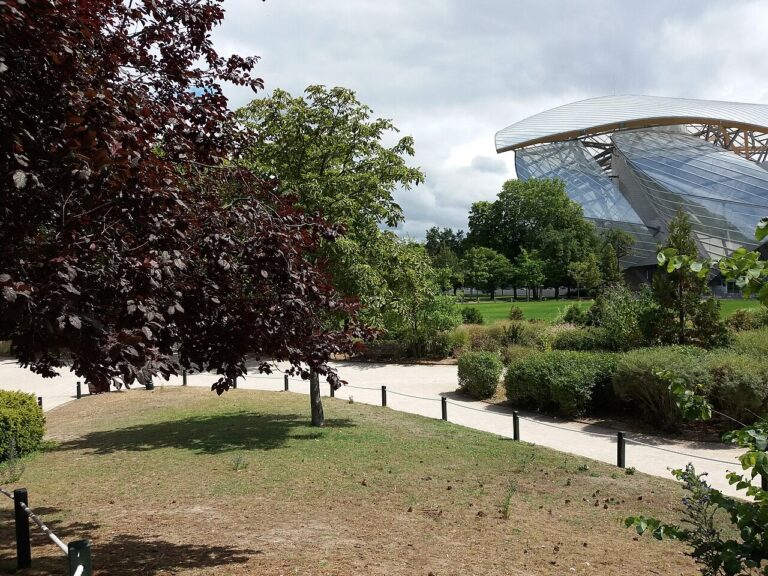
- Bois de Boulogne (5-minute walk) — 846 hectares of urban forest, Lower Lake, Upper Lake, Pré Catelan (gourmet restaurant), Bagatelle (park and famous rose garden), Louis Vuitton Foundation (Frank Gehry architecture, contemporary art) 15 minutes away on foot
- Guimet Museum (15 minutes by metro, Line 9) — the world’s largest collection of Asian art outside of Asia
- Quai Branly-Jacques-Chirac Museum (20 minutes by metro) — arts and civilizations of Africa, Asia, Oceania, and the Americas
- Balzac House (20-minute walk) — a house-museum where Honoré de Balzac lived and worked
- Avenue Mozart and Rue de Passy (10-minute walk) — a chic shopping district in the 16th arrondissement with boutiques, cafés, and brasseries for lunch
A full day dedicated to Impressionism is entirely possible by combining a visit to the Marmottan Monet in the morning (until 1:00 p.m.), lunch on Rue de Passy or Avenue Mozart, followed by transportation to the Musée de l’Orangerie (Tuileries) in the early afternoon to see the two oval rooms dedicated to the Water Lilies, designed by Monet— a perfect extension of the Marmottan collection.
— M