Petit Palais — the City of Paris’s free Museum of Fine Arts
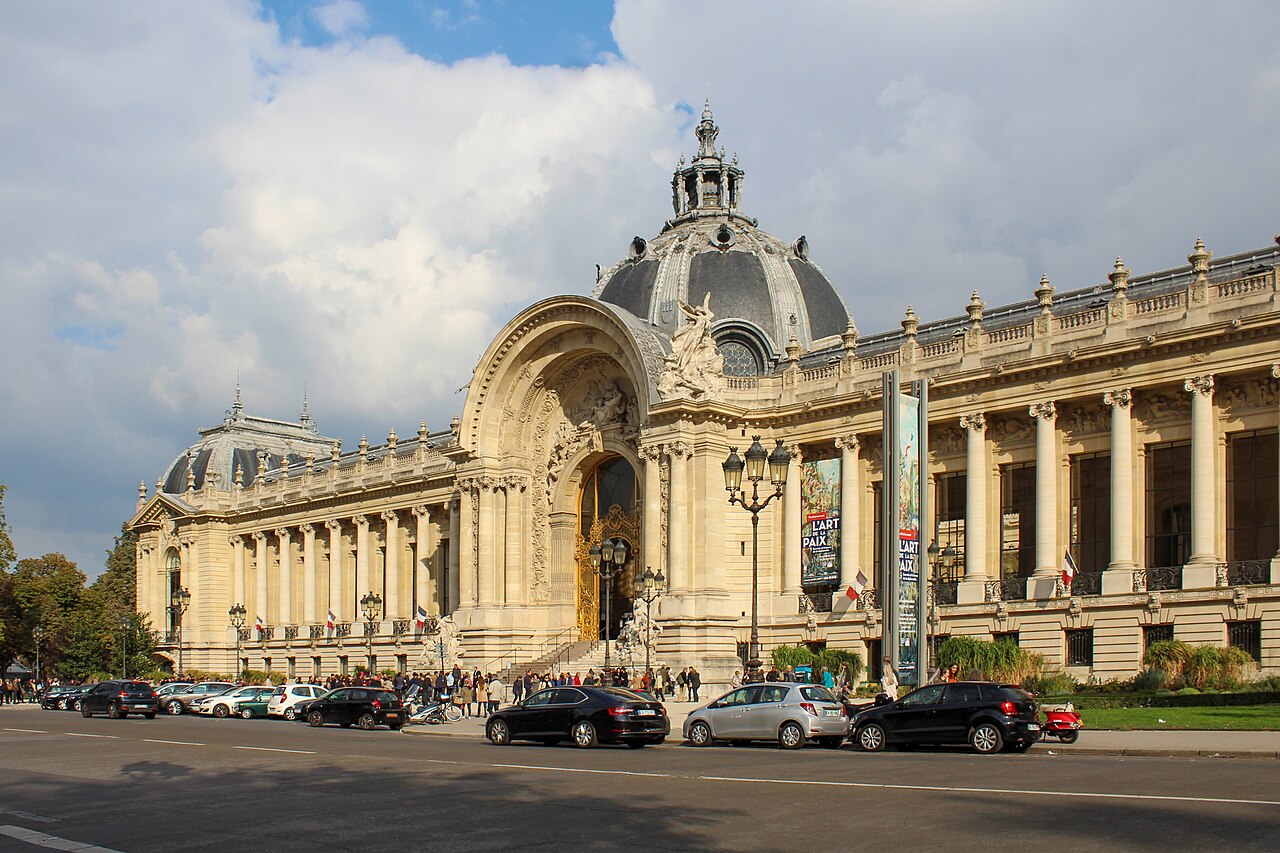
Across from the Grand Palais, just a stone’s throw from the Champs-Élysées, a palace of stone, glass, and gold houses one of the most beautiful museums in Paris—and one of the few whose permanent collections are entirely free to visit. The Petit Palais, the City of Paris’s Museum of Fine Arts, offers a striking overview of Western art, from antiquity to the early 20th century, in a sumptuous architectural setting.
Built for the 1900 World’s Fair, this palace is a work of art in its own right: a monumental façade, a dome, grand staircases, and above all, a charming colonnaded courtyard—a haven of peace in the heart of the city. Inside, the collections reveal a wealth of treasures: Greek vases, Renaissance paintings, 17th-century Dutch masterpieces, 18th-century French paintings, and, above all, a magnificent collection of 19th-century paintings featuring the greatest artists.
Although it is too often overshadowed by its neighbor, the Grand Palais, or by the major national museums, the Petit Palais is nonetheless one of the capital’s gems—and the fact that admission is free makes it an ideal destination, accessible to everyone. This article guides you through its collections, history, masterpieces, and everything you need to know to plan your visit.
The Petit Palais at a Glance
| Address | Avenue Winston Churchill, 75008 Paris |
| Subway | Champs-Élysées – Clemenceau (1, 13) or Franklin D. Roosevelt (9) |
| Hours | Tue–Sun 10 a.m.–6 p.m. (late-night hours on Fridays for exhibitions), closed Mondays |
| Rates | Free permanent collections — temporary exhibitions require an admission fee |
| Official Website | www.petitpalais.paris.fr |
Must-See Works
The museum presents a chronological overview of history from antiquity through 1914. Since virtually all of the collections are in the public domain, the works may be freely reproduced.
1. The Collection of Greek Vases
one of the most significant collections of ancient ceramics in France, featuring elegant forms and refined decorations, yet often overlooked by visitors.
2. Self-Portrait with a Dog
Rembrandt (1842). A masterpiece of 17th-century Dutch painting, created by one of the greatest portrait artists of all time.
3. 18th-century paintings
Fragonard, Greuze, and their contemporaries, who embody the grace, sensitivity, and art of living of the Age of Enlightenment.
4. The 19th-Century Gallery
The highlight of the museum, where Eugène Delacroix and Courbet are displayed alongside the Impressionists, from Claude Monet to Cézanne.
5. The Indoor Garden
More than just a work of art, it is a place: this semicircular colonnaded peristyle, surrounded by its pools and lush vegetation, is one of the museum’s most enchanting spaces.
The Petit Palais’s collections offer a comprehensive overview of art from antiquity through 1914, spanning a wide variety of fields: painting, sculpture, furniture, decorative arts, and graphic arts. Here are the must-see highlights to discover as you explore the museum.
The ancient collections open the tour with beautiful displays, including a remarkable collection of Greek vases—one of the most significant in France. These ceramics, with their elegant forms and refined decorations, bear witness to the art of ancient Greece and constitute a treasure that is often overlooked in the museum.
17th-century Dutch and Flemish painting holds some wonderful surprises, including a famous self-portrait by Rembrandt featuring a dog. This masterpiece by the Dutch master—one of the greatest portrait painters of all time—is one of the jewels of the collection.
The 18th-century French period is well represented, with works by great masters such as Fragonard and Greuze, who embody the grace, sensitivity, and art of living characteristic of this refined century. These paintings, featuring romantic or sentimental subjects, captivate viewers with their virtuosity and charm.
19th-century French painting is the museum’s highlight, featuring an exceptional collection. Visitors can admire the great Romantics and Realists, such as Delacroix and Courbet, whose power and boldness left their mark on their era. The exhibition also features the masters of Impressionism and their circle—Monet, Renoir, Pissarro, Sisley, and Cézanne—allowing visitors to trace the evolution of modern painting. This wealth of art makes the Petit Palais an essential destination for anyone who loves the 19th century.
The graphic arts collection is a treasure trove for lovers of drawing and printmaking, featuring, in particular, complete series of prints by great masters such as Rembrandt and Dürer. These works on paper, which are displayed on a rotating basis to ensure their preservation, reveal a more intimate and technical aspect of the creative process.
Works of art and furniture round out the tour, with collections ranging from the Middle Ages to the Belle Époque: enamels, gold and silverwork, ceramics, and furniture, all bearing witness to the refinement of the decorative arts throughout the centuries. The museum also houses works from the French and Italian Renaissance, further enriching this overview.
History of the Building
The Petit Palais is inextricably linked to a defining moment in the history of Paris: the 1900 World’s Fair, which saw the capital adorned with prestigious monuments. The building is one of the finest examples of that era of splendor and confidence.
The Petit Palais was built for the 1900 World’s Fair by architect Charles Girault, who turned it into a masterpiece of Beaux-Arts architecture from the Belle Époque. Together with its neighbor, the Grand Palais, and the Pont Alexandre III spanning the Seine, it forms a unique monumental ensemble, designed as a single entity to celebrate the new century and France’s global influence. This magnificent vista, stretching from the Champs-Élysées to Les Invalides via the bridge, remains one of Paris’s finest urban achievements.
The architecture of the Petit Palais is well worth a closer look. The façade, adorned with sculptures and crowned by a dome, opens onto a majestic portico. Inside, the grand staircases, painted ceilings, and sumptuous décor bear witness to the craftsmanship of the artists of the 1900s. But the building’s crowning jewel is undoubtedly its interior garden, a semicircular peristyle with colonnades surrounding pools and lush vegetation—a place of rare serenity where you can take a break at the café. The building has been designated a historic monument.
As early as 1902, the Petit Palais became the City of Paris Museum of Fine Arts, intended to house and expand the municipality’s art collections. Since then, it has continued to grow through donations, bequests, and acquisitions, forming a collection of great richness. Remarkably renovated, it now offers a clear and luminous chronological journey through art, set within an exceptional architectural setting. The Petit Palais is thus a masterpiece in two ways: through the building that houses it and through the collections it displays.
How to Visit
The Petit Palais presents its permanent collections in chronological order, from antiquity to the early 20th century. This clear layout allows visitors to trace the evolution of art through the ages and to move easily through the museum’s spacious galleries.
One of the Petit Palais’s greatest assets is that its permanent collections are free and open to everyone year-round. It’s a rare opportunity to explore such a rich collection without paying an admission fee, making it an ideal destination, even for a short or impromptu visit. Only the temporary exhibitions require an admission fee.
Plan on spending at least two hours to explore the collections at a leisurely pace; art lovers can easily spend half a day here. Don’t forget to take a break in the magnificent colonnaded courtyard, one of the museum’s most charming spots, where you can grab a bite to eat at the café. The museum is accessible to visitors with limited mobility and offers activities for young visitors, making it a great family outing as well.
Practical FAQ
Is admission to the Petit Palais free?
Yes, admission to the Petit Palais’s permanent collections is completely free, year-round and for everyone. Only temporary exhibitions require an admission fee, with prices varying depending on the schedule.
What are the Petit Palais’s hours?
The museum is open Tuesday through Sunday, from 10 a.m. to 6 p.m. (ticket sales end around 5 p.m.). Late-night hours are offered on Friday evenings for temporary exhibitions. It is closed on Mondays and certain holidays.
Where is the Petit Palais located?
The Petit Palais is located on Avenue Winston Churchill in the 8th arrondissement, across from the Grand Palais, near the Champs-Élysées. The nearest metro stations are Champs-Élysées–Clemenceau (lines 1 and 13) and Franklin D. Roosevelt (line 9).
Do you need to make a reservation to visit the Petit Palais?
No reservation is required for the free permanent collections. For temporary exhibitions, online reservations are recommended, especially for the most popular ones.
What’s there to see at the Petit Palais?
The museum presents a survey of art from antiquity through 1914: Greek vases, Flemish and Dutch paintings (including a self-portrait by Rembrandt), 18th-century art, and a rich collection of 19th-century French paintings (Delacroix, Courbet, Monet, Renoir, Cézanne), as well as works of art.
How much time should I set aside for the visit?
Allow at least two hours for the permanent collections; half a day for an in-depth visit that includes a temporary exhibition and a break in the garden.
Is the Petit Palais family-friendly?
Yes, the museum is accessible and offers activities tailored to young visitors. With free admission and a garden, it’s an ideal family outing.
Around the Museum
The Petit Palais enjoys an exceptional location in the heart of one of Paris’s most prestigious historic districts. A visit to the museum is a natural part of exploring this neighborhood, rich in history and beauty.
Directly across stands the Grand Palais, its monumental counterpart, also built for the 1900 World’s Fair. Between the two runs Avenue Winston Churchill, which leads to the Pont Alexandre III, the most opulent bridge in Paris, adorned with gilded details and sculptures, offering a magnificent view of the Seine and Les Invalides. This ensemble—the Grand Palais, the Petit Palais, and the bridge—forms a magnificent vista that is an absolute must-see.
Nearby, the Champs-Élysées with its lively atmosphere, the Place de la Concorde, and the Champs-Élysées Gardens are perfect for a stroll. This elegant, central neighborhood allows you to combine a visit to the museum with exploring some of Paris’s most iconic sites. A day spent around the Petit Palais—taking in art, architecture, and a leisurely stroll along the Seine—is one of the best ways to experience the capital.
What to See Across the Street – The Grand Palais
— M