From Monet to Hockney — A Century of Landscapes at the Marmottan Museum
To mark the 100th anniversary of Claude Monet’s death, the Marmottan Monet Museum—which houses the world’s largest collection of Monet’s works—is presenting an ambitious exhibition dedicated to landscape art, from the master of Impressionism to the present day. Titled “Landscape…
📍 Marmottan Monet Museum 🗓 Du 24 septembre 2026 au 31 janvier 2027
| Dates | Du 24 septembre 2026 au 31 janvier 2027 |
| Location | Marmottan Monet Museum |
| Opening hours | 10 a.m.–6 p.m., late night hours on Thursdays until 9 p.m., closed on Mondays |
| Full price | 14 euros |
| Reduced price | 9 euros |
| Metro | La Muette |
To mark the 100th anniversary of Claude Monet’s death, the Marmottan Monet Museum—which houses the world’s largest collection of Monet’s works—is presenting an ambitious exhibition dedicated to landscape art, from the master of Impressionism to the present day. Titled “Landscape Stories. From Monet to Hockney (1893–2026), the exhibition, running from September 24, 2026, to January 31, 2027, brings together more than a hundred works tracing over a century of landscape painting.
The exhibition’s theme is fascinating, and its perspective is original. In the 19th century, landscape painting was one of the most popular and respected genres in art—the quintessential genre of Impressionism and Monet. But in the 20th century, shaken by the avant-garde, abstraction, and the tragedies of history, it seemed to recede and fall out of fashion. The exhibition shows that this was not the case: landscape painting endured, transformed itself, and reinvented itself, remaining to this day a major force in the arts—from Monet to David Hockney.
The result of a collaboration between the Marmottan Monet Museum and the Grenoble Museum, curated by art historian Pierre Wat, the exhibition brings together French and international artists—rarely shown together—spanning nearly a century and a half. Through paintings, photographs, videos, and sculptures, the exhibition explores the landscape in all its forms, reflecting the upheavals of the modern world.
This article explores the theme of this anniversary exhibition, the Marmottan’s unique place in Monet’s history, the perspective of landscape shaped by history, the exhibition’s itinerary and the artists featured, as well as all the practical information you need to plan a visit through January 31, 2027.
The Reason Behind the Exhibition — Landscape, from Monet to the Present Day
The exhibition is part of the centennial commemorations of the death of Claude Monet, who passed away in 1926. But rather than dedicating yet another retrospective to the master, the Marmottan Monet Museum has taken a broader and bolder approach: using Monet as a starting point to explore a century and a half of landscape art, all the way to today’s artists. Monet thus becomes the starting point for a history that extends beyond him—that of the landscape in modern and contemporary art.
The chronological starting point is significant: 1893. This is when Monet, having settled in Giverny, began his major series and pushed landscape painting toward a radical modernity, paving the way for all the artistic explorations of the following century. From there, the exhibition traces the thread forward to the present day, to contemporary artists such as David Hockney, whose vibrantly colored landscapes attest to the genre’s enduring vitality. From Monet to Hockney, the exhibition unfolds more than a century of perspectives on the landscape.
This perspective raises a fundamental question: What became of landscape art in the 20th century? Once the dominant genre of the 19th century, it seems threatened by the rise of abstraction, by the avant-garde movements that turned away from representation, and by the catastrophes of history that made it difficult to celebrate nature with serenity. The exhibition shows how, despite everything, landscape painting survived and underwent a transformation, becoming a medium for expressing new concerns—memory, destruction, reconstruction, ecological anxiety, and nostalgia. Far from dying out, landscape painting has taken on new meanings.
The Marmottan Monet Museum — the temple of Monet
Just as the Monet exhibition at the Orangerie derives its meaning from the venue that hosts it, the exhibition at the Marmottan draws its legitimacy from the museum’s very identity: the Marmottan Monet is a temple to Monet, the institution that houses the world’s largest collection of his works.
Housed in an elegant townhouse in Paris’s 16th arrondissement, on the edge of the Bois de Boulogne, the Marmottan Monet Museum owes its rich collection to an exceptional bequest: that of Michel Monet, the painter’s son, who donated to the museum in 1966 all of his father’s works that had remained in the family. The Marmottan thus became the custodian of the world’s largest collection of Monet works, with dozens of paintings spanning his entire career, from his early years to his final water lilies.
In particular, the museum houses the work that gave Impressionism its name: Impression, Sunrise (1872), this view of the port of Le Havre at dawn, which, when exhibited in 1874, inspired a critic to coin the derisive term “Impressionists”—a label that was soon embraced as a banner. Contemplating this seminal painting in the museum named after Monet is in itself a reason to visit the Marmottan. For the duration of the exhibition, your ticket grants you access to both *Histoires de paysages* and this exceptional permanent collection—a rare privilege that makes the Marmottan an essential stop on the Monet centennial tour.
Landscape: A Genre Shaped by History
The core of the exhibition’s message—and its most powerful idea—is to show how landscape art in the 20th century was shaped and transformed by history. Far from being a peaceful and timeless genre, landscape art became a mirror reflecting the world’s upheavals.
In the 19th century, landscape painting was often a celebration: a celebration of nature, of light, of the countryside, and of the beauty of the world. The Impressionists, led by Monet, painted the joy of a sunny day, the serenity of the banks of the Seine, and the splendor of a garden. But the 20th century—with its wars, ideologies, destruction, migrations, and anxieties—would imbue the landscape with new, more serious, and more troubled meanings. The landscape could no longer be merely beautiful; it also had to reflect the world as it had become.
Thus, through the works brought together here, we see the landscape becoming a witness to history. It represents destruction and reconstruction, nostalgia for a vanished world, and anxiety about the future. Artists choose the landscape to speak about their country, their land, their people, and nature under threat. A field, a forest, a city, or a coastline are no longer merely picturesque motifs: they become imbued with memory, politics, and emotion. The exhibition showcases this new power of the landscape—its capacity to bear the weight of history and human concerns.
This reinterpretation is fruitful. It invites us to look anew at works we thought we knew, to perceive, beneath the surface of the landscapes, the tensions and dramas of the century. It also shows that the landscape, far from being an outdated genre, has retained its vitality and relevance, capable of constantly reinventing itself to reflect the contemporary world. From Impressionist serenity to contemporary unease, the landscape has embraced every transformation of the modern gaze.
The Exhibition — More Than 100 Works, from Monet to Hockney
The exhibition brings together more than a hundred works, organized along both chronological and thematic lines. This dual approach allows visitors to trace the evolution of the landscape over time, while highlighting the major themes and issues that run through it.
The diversity of media is one of the exhibition’s greatest strengths. Alongside the paintings, visitors will discover photographs, videos, and sculptures—for in the 20th century, the landscape transcended the boundaries of painting to encompass all forms of expression. This variety reflects the vitality and adaptability of the genre, as well as its ability to reinvent itself through ever-changing forms. Visitors thus move from Impressionist canvases to documentary photography, from sculpture to moving images.
The exhibition brings together artists—both French and international, some well-known and others yet to be discovered—who are rarely featured together in a single exhibition. Highlights include works by Claude Monet, Pierre Bonnard, Félix Vallotton, Edvard Munch, Chaïm Soutine, Henri Matisse, Anna-Eva Bergman, Alex Katz, Walker Evans, John Vachon, Caroline Bachmann, Nikita Kadan, and many others, right up to David Hockney. This unprecedented juxtaposition creates dialogues, echoes, and fruitful contrasts, revealing the continuity and transformations of the landscape over more than a century.
Artists in Dialogue
One of the exhibition’s major achievements is to bring together artists we are not accustomed to seeing side by side, revealing unexpected connections and parallels across time and space.
In the beginning, Monet—the starting point, the master of modern landscape painting, whose series and water lilies paved the way for everything that followed. Around him and after him came the great names of the turn of the century: Pierre Bonnard and his landscapes bathed in color and intimacy, Félix Vallotton and his strange, stylized landscapes, Edvard Munch and his landscapes steeped in existential anguish, Chaïm Soutine and his tormented, convulsive landscapes, and Henri Matisse and his chromatic freedom. Each, in his own way, extended and transformed the legacy of landscape painting.
Next come artists from the late 20th century and our own time, who demonstrate the genre’s enduring presence and reinvention: the American Alex Katz and his landscapes of flat areas of color, the Norwegian Anna-Eva Bergman and her abstract horizons, the American documentary photographers Walker Evans and John Vachon, and contemporary artists from diverse backgrounds, right up to David Hockney, whose vibrant landscapes—whether painted or created on a digital tablet—speak to the genre’s ever-renewed vitality. From Monet to Hockney, a dialogue spanning the century unfolds, revealing the inexhaustible richness of landscape art.
The Curator’s Perspective
The exhibition is curated by Pierre Wat, an art historian, professor at Paris I Panthéon-Sorbonne University, and a renowned expert on landscape and Romanticism. His perspective lends the exhibition its intellectual coherence and ambition.
Pierre Wat is one of France’s leading experts on landscape art, to which he has devoted several seminal works. His reflections focus in particular on how landscape—a genre that appears descriptive—is in reality imbued with meaning, history, and subjectivity. For him, painting a landscape is never a neutral act: it is an expression of a relationship to the world, an emotion, a thought, or an era. This concept underpins the entire theme of the exhibition.
Under his direction, the exhibition does more than simply showcase beautiful landscapes: it offers a genuine reflection on what it means to paint landscapes in the modern and contemporary eras, and on how this genre has navigated and expressed the upheavals of the century. It is this intellectual dimension, combined with the beauty of the works on display, that makes *Histoires de paysages* much more than just a beautiful exhibition: it is a meditation on landscape, art, and history. After Paris, the exhibition will be presented at the Musée de Grenoble, a co-producer of the event, in the spring of 2027.
Practical Information
Location: Musée Marmottan Monet, 2 rue Louis-Boilly, 75016 Paris (on the edge of the Bois de Boulogne)
Dates: September 24, 2026, through January 31, 2027
Directions:
- Subway: Line 9, La Muette station (then a few minutes’ walk along Avenue Ranelagh)
- RER: Line C, Boulainvilliers Station
- Bus: Lines 22, 32, 52, P.C.1
Hours:
- Open Tuesday through Sunday, from 10 a.m. to 6 p.m. (late night hours on Thursdays until 9 p.m.)
- Closed on Mondays
- Last entry and cash registers close 30 minutes before
Prices (to be confirmed on the official website):
- Full price: around 14 euros
- Reduced rate: around 9 euros
- Free for children under 7; special conditions apply for young people and specific groups
- The ticket grants admission to the exhibition and the permanent collections (including *Impression, Soleil Levant*)
Recommended visit duration: about 1 hour and 30 minutes (exhibition and Monet collection)
Reservations: Recommended online via the Marmottan Monet Museum website, especially on weekends and during school breaks.
Accessibility: Please contact the museum for information on access for visitors with limited mobility (historic mansion).
Good to know: The Musée de l’Orangerie is also presenting “Monet: Painting Time” (starting September 30). The two exhibitions complement each other perfectly for a weekend in Paris dedicated to Monet’s centennial.
Further Reading
Institutional sources cited
- Marmottan Monet Museum, exhibition brochure for ” Stories of Landscapes: From Monet to Hockney (1893–2026).”
- Grenoble Museum, co-producer of the exhibition.
Sources and Reference Studies
- Pierre Wat, *Pérégrinations: Landscapes Between Nature and History*, Hazan.
- Pierre Wat, works on Romanticism and landscape.
Institutional Documentation
- Marmottan Monet Museum — organizing institution and ticket office.
- Grenoble Museum — the exhibition’s stop in Grenoble (2027).
See also on Hors Cadre
- Claude Monet—the master of Impressionism —is the starting point of the exhibition, and the Marmottan Museum houses the largest collection of his works.
- Monet, Painting Time — The Centennial Exhibition at the Orangerie — the other major Monet exhibition taking place at the same time.
- Henri Matisse — one of the artists featured in the exhibition.
— M
| Dates | Du 24 septembre 2026 au 31 janvier 2027 |
| Location | Marmottan Monet Museum |
| Opening hours | 10 a.m.–6 p.m., late night hours on Thursdays until 9 p.m., closed on Mondays |
| Full price | 14 euros |
| Reduced price | 9 euros |
| Metro | La Muette |
Latest articles
Masterpieces
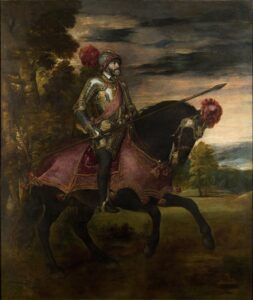
Charles V on Horseback — Titian
Alone in a twilight landscape, clad in his gleaming armour, a long lance in hand, the emperor advances on horseback, sovereign and grave: Titian’s Equestrian Portrait of Charles V at Mühlberg is one of the most famous portraits in the history of art and the birth certificate of the modern equestrian portrait. In a single...
Masterpieces
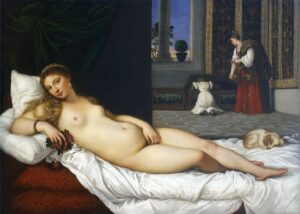
The Venus of Urbino — Titian
A young naked woman, reclining on a bed in a Venetian palace, holds the viewer’s gaze with quiet assurance: Titian’s Venus of Urbino is the most famous nude of the Renaissance and one of the most discussed images in the whole history of art. Through its assumed sensuality, its direct gaze and its composition, it...
Masterpieces
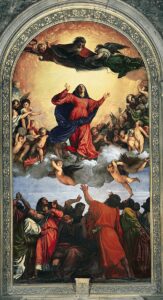
The Assumption of the Virgin — Titian
Above the high altar of one of the largest churches in Venice, an immense altarpiece nearly seven metres high unfolds a celestial vision: the Virgin Mary, borne by a host of angels, rises towards God in a blaze of golden light, while below the apostles, astonished, stretch out their arms towards her. Titian’s Assumption of...

