Velázquez — the painter of painters
A painter standing before an immense canvas, brush in hand, looking straight at us. Around him, a little princess in a pale dress, her maids of honour, a dwarf, a drowsing dog, and, in a mirror at the back of the room, the reflection of the king and queen. Las Meninas, painted in 1656, is one of the most discussed pictures in the entire history of art. Its author, Diego Velázquez, spent nearly forty years in the service of a single man, King Philip IV of Spain.
Born in Seville in 1599 and dead in Madrid in 1660, Velázquez left a surprisingly compact body of work: little more than a hundred paintings, most of which never left Spain. As a court painter he painted above all portraits — of the king, his family and his ministers, but also of the jesters and dwarfs who peopled the palace. And it was within this apparently restrictive setting that he invented a painting of astonishing freedom.
What sets Velázquez apart is the way he renders reality. Seen close up, his canvases dissolve into rapid, almost abstract strokes; from a distance they reassemble into fabrics, flesh and reflections of breathtaking accuracy. This secret of the brushstroke, this way of suggesting rather than describing, fascinated every painter who discovered him later, from Goya to Manet, from Picasso to Francis Bacon. Manet, back from Madrid in 1865, did not hesitate to call him the painter of painters.
The paradox of Velázquez fits in a sentence: a man who almost never left the Spanish court changed the way every later painter learned to see.
Seville and Pacheco’s workshop
Diego Rodríguez de Silva y Velázquez was baptised in Seville on 6 June 1599. Following a practice then common in Spain, he took his mother’s surname, Velázquez, rather than his father’s. His family, minor gentry of Portuguese origin on his father’s side, was far from wealthy, but it enabled him to enter the world of painting very young.
Early seventeenth-century Seville was one of the richest cities in Europe. As the sole port for trade with the Americas, it drew in the silver of the New World, merchants, scholars, convents and religious commissions. For a young painter, it was ideal ground.
At around the age of eleven, Velázquez entered the workshop of Francisco Pacheco. An honourable rather than brilliant painter, Pacheco was above all a cultivated man, a theorist of art, at home among the city’s poets and theologians. He gave his pupil a solid technical training and, more than that, a rare intellectual openness. In 1617 Velázquez passed the examination that allowed him to practise as a master painter; the following year he married his master’s daughter, Juana Pacheco.
Pacheco never hid his admiration for his son-in-law. In his treatise on the art of painting, published after his death, he proudly recounts the young man’s beginnings and explains that he gave him his daughter because of his qualities and promise. It was also in Seville that Velázquez befriended another young painter destined for a great future, Francisco de Zurbarán.
The bodegones, reality in the kitchen
Velázquez’s earliest works come as a surprise. In a city where painters mostly produced saints and altarpieces, the young artist turned to kitchen and tavern scenes, which the Spanish call bodegones.
An old woman cooks eggs in an earthenware pan; a water seller hands a glass to a boy; two young men share a frugal meal. These pictures, painted between about 1617 and 1622, show ordinary people and humble objects — jugs, mortars, onions, fish — with a gravity and attention normally reserved for noble subjects. Old Woman Frying Eggs, now in Edinburgh, and The Waterseller of Seville, in London, are the most famous examples.
The influence of Caravaggio, whose painting was then known in Spain through copies and followers, is plain: strong contrasts of light and shadow, figures modelled by raking light, dark backgrounds. But they already show what would make Velázquez unique: an ability to render the substance of things — earthenware, copper, glass catching the light, wrinkled skin — with an almost tactile precision.
These bodegones are more than youthful exercises. They reveal a gaze that refuses hierarchy: for Velázquez a beggar deserves the same attention as a king. He would keep that equality of regard all his life, right through to his portraits of the palace jesters.
Madrid, the king’s painter
In 1622 Velázquez made a first trip to Madrid. He returned the following year at the call of the Count-Duke of Olivares, the all-powerful minister of the young King Philip IV, himself from Seville and keen to promote talent from his home city. A single portrait of the king was enough: in 1623 Velázquez was appointed painter to the king. He was twenty-four.
It was the start of an exceptional relationship that lasted until the painter’s death. Philip IV, a great lover of art, liked to visit Velázquez’s studio in the palace to watch him work, and soon wanted to be portrayed by no one else. King and painter grew old together, and the successive portraits of Philip IV, from the stiff, pale young man of the 1620s to the weary, aged monarch of the 1650s, form one of the most striking chronicles of a face in the history of painting.
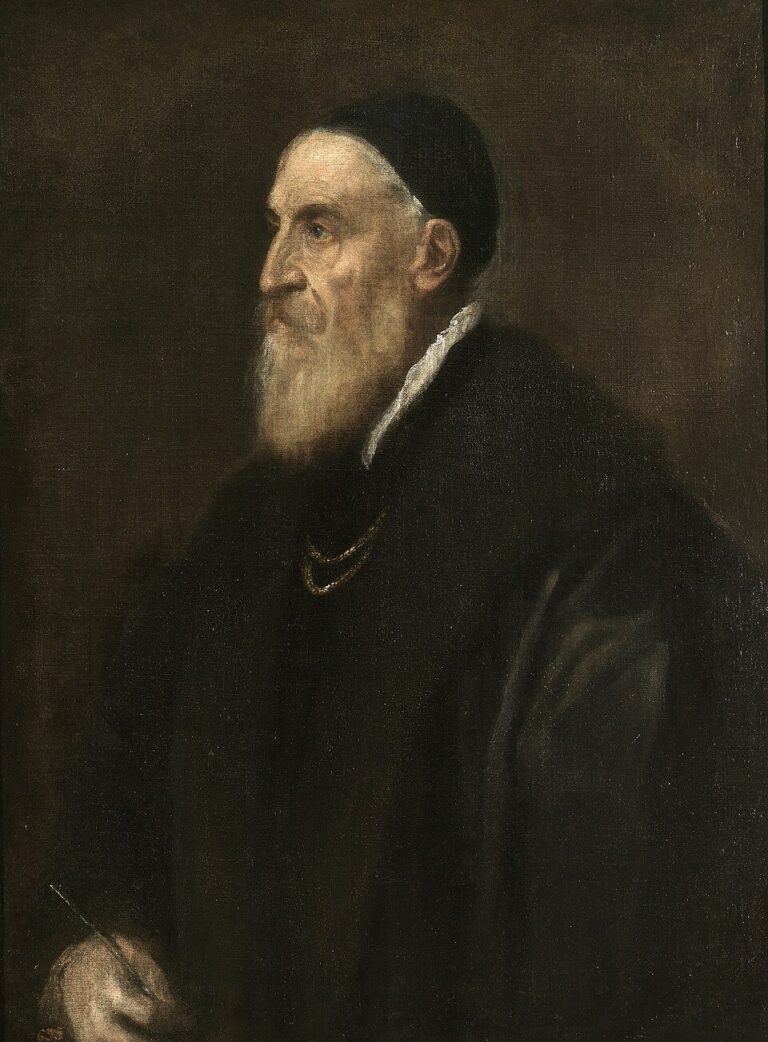
In Madrid Velázquez above all discovered the royal collections, among the richest in Europe. There he studied the great Venetians, and first of all Titian, whose patrons the kings of Spain had been. His palette lightened and his brushwork gradually freed itself from the darker, more sculptural Seville manner.
In 1628 Rubens spent several months in Madrid on a diplomatic mission. The great Flemish master, then at the height of his fame, and the young man from Seville spent time together and visited the royal collections side by side. It was probably Rubens who encouraged Velázquez to do what every great painter had to do: go to Italy.
Italy, two decisive journeys
Velázquez sailed for Italy in August 1629 with the king’s consent. He stayed until early 1631, passing through Genoa, Venice and Ferrara and, above all, Rome, where he studied ancient sculpture, Michelangelo and Raphael.
This first stay produced two ambitious pictures, The Forge of Vulcan and Joseph’s Bloody Coat Brought to Jacob, both painted in 1630. In them Velázquez measures himself against the grand genre of history painting, with nudes of remarkable anatomical mastery. But the essential change lies elsewhere: through contact with Italy his painting gained light, space and lightness. Back in Madrid, he entered his great maturity.
The 1630s were the years of the great royal projects. For the Hall of Realms in the new Buen Retiro palace, Velázquez painted The Surrender of Breda around 1635, in which the victorious general courteously stops the defeated governor from kneeling as he hands over the keys of the city: a war scene without violence, which became the very image of magnanimity. He also painted the great equestrian portraits of the royal family and hunting portraits.
Twenty years later, in 1649, the king sent him back to Italy, this time to buy works of art and recruit fresco painters for the palace. In Rome Velázquez painted his assistant Juan de Pareja, and the portrait, exhibited at the Pantheon in 1650, caused a sensation. That same year Pope Innocent X agreed to sit for him. The resulting portrait, of an almost disquieting psychological frankness, is one of the greatest portraits in the history of art. Velázquez did not return to Madrid until 1651, despite Philip IV’s repeated summons.
Portraitist of the court
As the king’s painter, Velázquez was first and foremost a portraitist. But his court portraits are anything but conventional.
Members of the royal family appear with striking restraint. No overloaded décor, no allegories: figures against neutral grey or brown grounds, dressed in black according to the austere etiquette of the Spanish court. All attention goes to faces, hands and a few accents of colour — a ribbon, a piece of embroidery, a gleam of silver. In the final years, the portraits of the Infanta Margarita, a fair-haired little girl in pink or blue silk dresses, show a dazzling freedom of touch.
More surprising still are the portraits of the court jesters and dwarfs. These men and women, destined by disability or eccentricity to entertain the great, are painted by Velázquez with the same dignity as princes. Seated, often facing us, they look at the viewer with an intelligence, melancholy or irony that forbids any mockery. They are among the most humane portraits of seventeenth-century painting.
The painter did not confine himself entirely to portraiture. He painted a few religious subjects, including a Christ Crucified of great restraint, and some mythological scenes. The most famous of these is The Rokeby Venus, painted between 1647 and 1651 and now in the National Gallery in London: the only surviving female nude by his hand, an extreme rarity in the Spain of the Inquisition.
Las Meninas and the final years
Velázquez’s last years were those of a double career. As a painter he produced his most daring masterpieces; as a courtier he climbed the ranks of the royal household, devoting more and more time to administrative duties.
He had held palace offices since the 1620s. In 1652 he became aposentador de palacio, one of the senior officials responsible for the practical running of the royal residence and the court’s travels. This prestigious and demanding post partly explains how few paintings he produced late in life.
Yet it was in this period that he painted Las Meninas, in 1656. The canvas, more than three metres high, shows the Infanta Margarita surrounded by her attendants in a room of the palace, while the painter himself, on the left, works on a large canvas of which we see only the back. The play of gazes, the mirror reflecting the royal couple and the open door at the back turn this seemingly familiar scene into a dizzying meditation on painting, representation and the viewer’s place. The Spinners, painted in the same years, likewise hides a mythological subject behind a scene in a tapestry workshop.
Velázquez’s social ambition was crowned in 1659, when he was made a knight of the Order of Santiago, an exceptional honour for a painter, after an inquiry into the nobility of his ancestry. According to a persistent tradition, the red cross of the order painted on his chest in Las Meninas was added afterwards. In the spring of 1660 he organised the decoration of the pavilion on Pheasant Island, on the Bidasoa river, where the Infanta Maria Theresa was handed over to Louis XIV for their marriage. He returned to Madrid exhausted and died on 6 August 1660.
The painter of painters
After his death, Velázquez long remained a Spanish secret. His paintings, almost all kept in the royal palaces, were virtually invisible to the rest of Europe.
Goya was one of the first to rediscover him and claim him as a model. In the 1770s he made etchings after his paintings, and he is said to have recognised only three masters: nature, Rembrandt and Velázquez. But it was in the nineteenth century, with the opening of the Prado Museum in 1819 and the wider circulation of Spanish painting, that his fame became European.
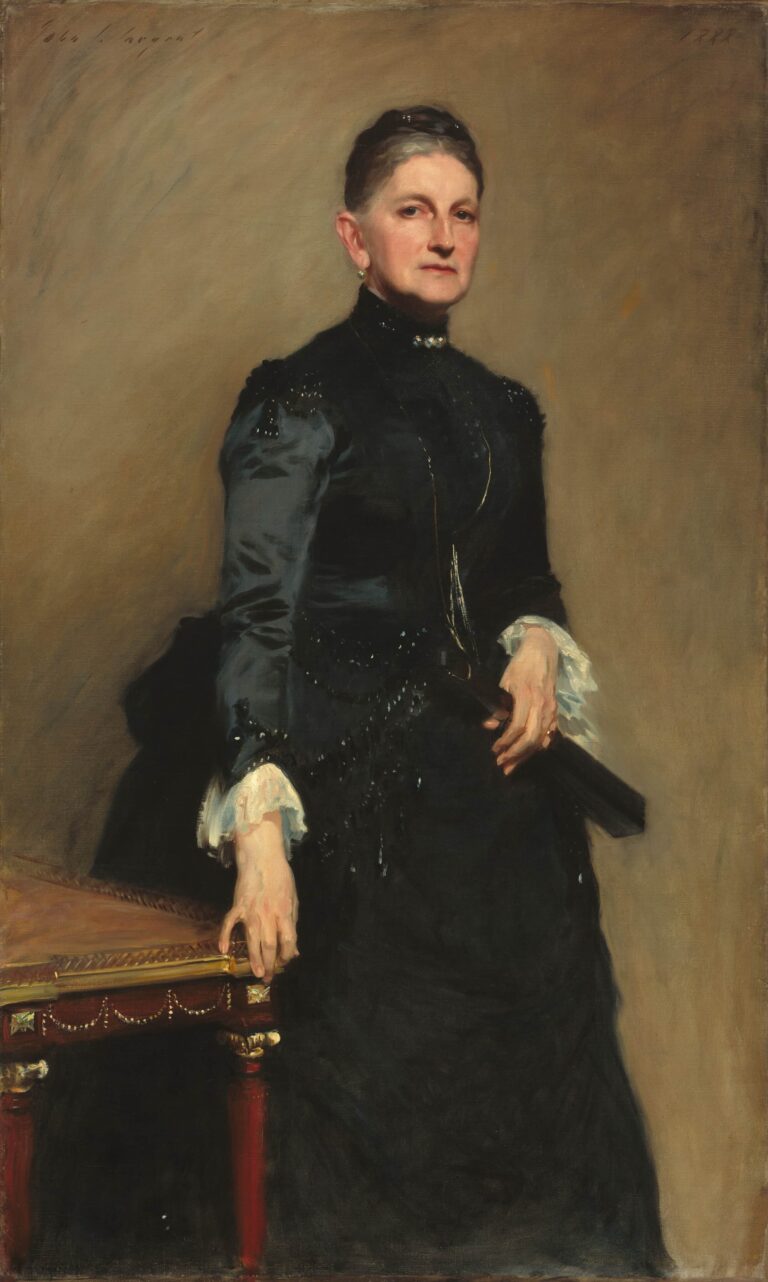
For the Realists and the Impressionists the discovery was a revelation. Manet, who travelled to Madrid in 1865, was overwhelmed: in Velázquez he found confirmation of everything he was looking for — direct painting, neutral backgrounds, a brushstroke that suggests rather than details. Whistler, Sargent and Degas were also fervent admirers.
The twentieth century never stopped conversing with him. In 1957 Picasso devoted a series of several dozen variations to Las Meninas, now in the Museu Picasso in Barcelona. Francis Bacon, obsessed by the Portrait of Innocent X, drew from it his series of screaming popes from the 1950s onwards. Few old masters have been taken up, questioned and reinvented by the moderns to such a degree.
Where to see his works
Velázquez’s work is to be discovered above all in Madrid, but several of the world’s great museums hold masterpieces by him.
In Madrid
The Prado holds the most important collection in the world, drawn from the royal collections: Las Meninas, The Spinners, The Surrender of Breda, The Forge of Vulcan, The Triumph of Bacchus, the equestrian portraits, the portraits of the royal family and the series of jesters. A visit to the Prado is essential to understand the painter.
Around the world
In Rome, the Galleria Doria Pamphilj holds the Portrait of Innocent X, still in the collection of the pope’s family. The Metropolitan Museum of Art in New York owns the Portrait of Juan de Pareja, the National Gallery in London The Rokeby Venus, and the Scottish National Gallery in Edinburgh Old Woman Frying Eggs. In France, the Louvre displays a few works by Velázquez and his workshop.
From 7 October 2026 to 25 January 2027, the Louvre is also holding a major exhibition devoted to Zurbarán, the Seville friend of his youth: an opportunity to see, side by side, what unites and what separates the two great masters of the Spanish Golden Age.
Further Reading
Institutional Documentation
- Museo del Prado, Madrid — the largest group of works by Velázquez in the world.
- The National Gallery, London — The Rokeby Venus and several major works.
- Image : The Metropolitan Museum of Art, New York – Portraitof Juan de Pareja by Velasquez, 1650
See also on Hors Cadre
- Titian — the prince of painters — the Venetian master of the royal collections, whom Velázquez studied all his life.
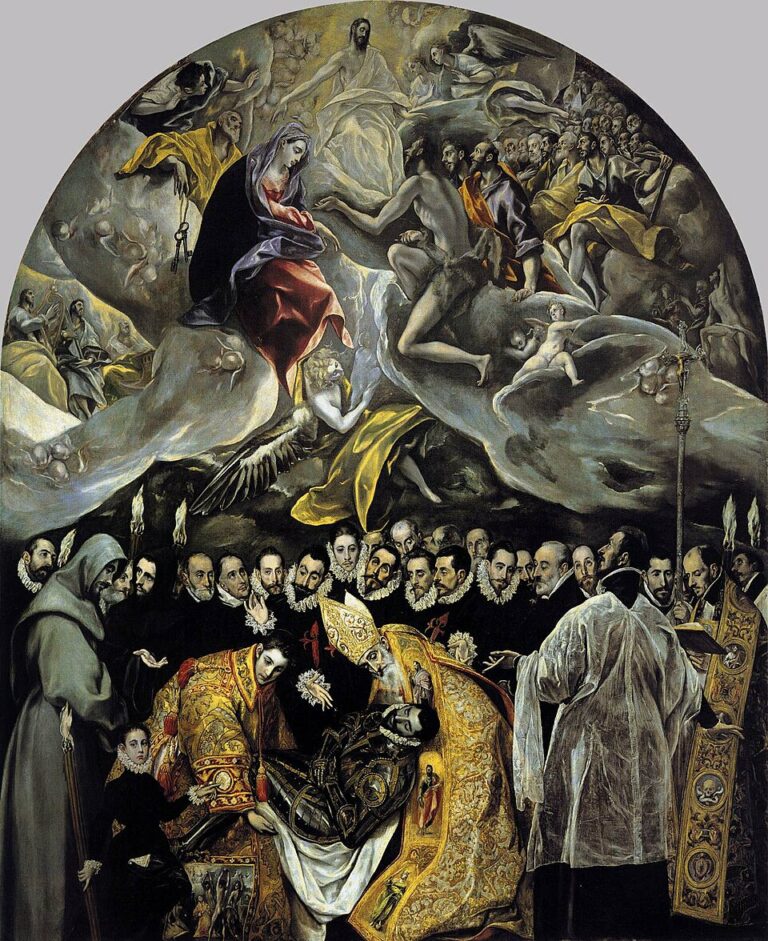
- El Greco — the Visionary of Toledo — his great predecessor in Spain, whose work he admired.
— M