Jacquemart-André Museum — What to See, Hours, Tickets
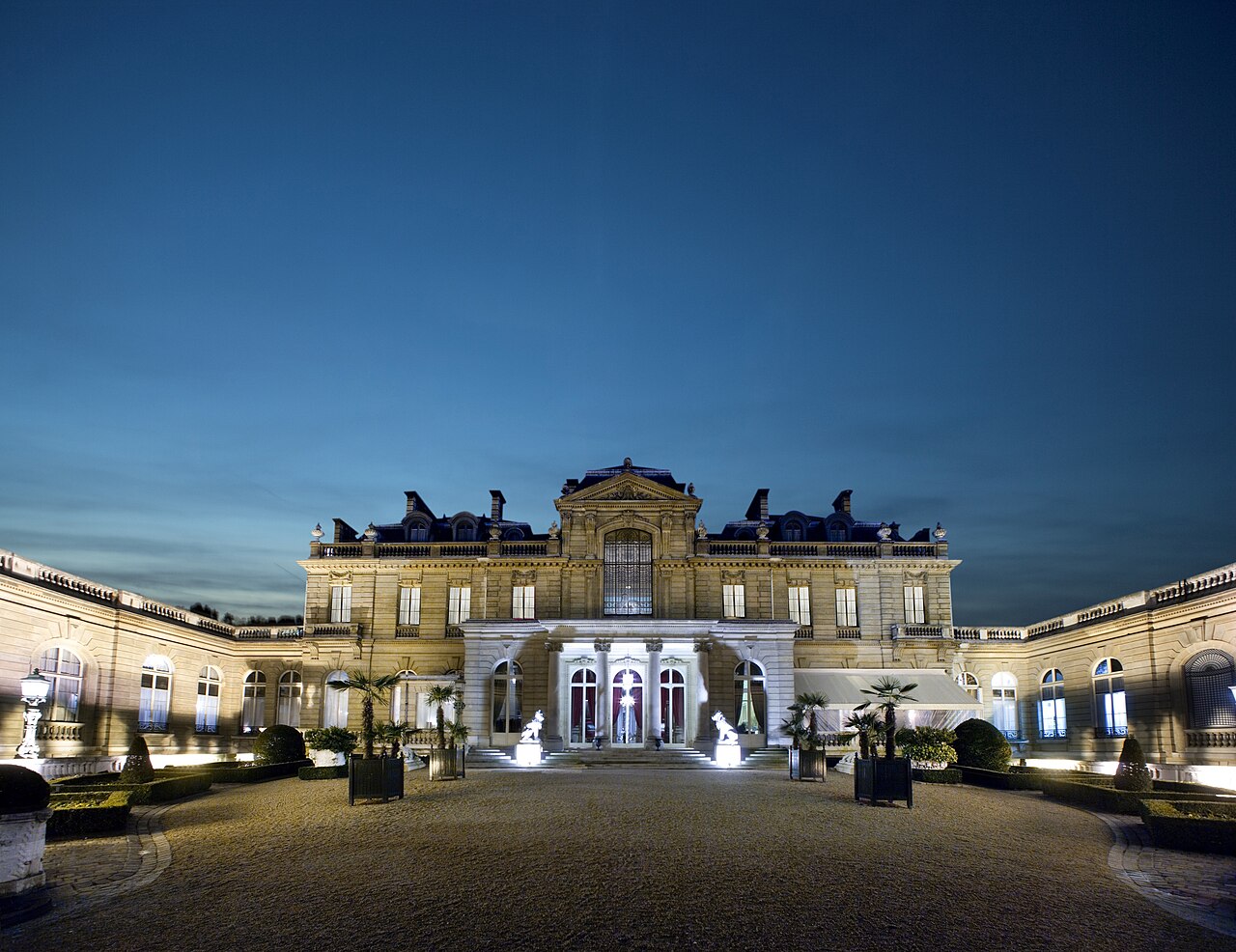
Just a few minutes from the Champs-Élysées, at 158 Boulevard Haussmann (8th arrondissement), the most beautiful private house-museum in Paris is hidden behind a Haussmann-style facade. The Jacquemart-André Museum is not like other museums: it is a lived-in home —that ofÉdouard André (1833–1894), heir to one of the Second Empire’s greatest banking fortunes, and his wife Nélie Jacquemart (1841–1912), a painter who became one of the most daring art collectors of her century. Visitors move from salon to salon, from the winter garden to the smoking room, from the private apartments to the spectacular “Italian museum” upstairs, just as if they were guests of the couple attending a Belle Époque soirée.
The collection assembled by the André couple over thirty years of travel and acquisitions is, according tothe Institut de France —which owns it—one of the world’s most significant private collections open to the public: the Italian Renaissance of the Quattrocento (Uccello, Botticelli, Mantegna, Bellini, Carpaccio), 17th-century Flemish and Dutch masters (Rembrandt, Van Dyck, Ruysdael), the 18th-century French school (Fragonard, Chardin, Nattier, Vigée Le Brun), and English painting (Reynolds, Gainsborough, Lawrence). The museum belongs to the same family of institutions as the Wallace Collection in London, the Frick Collection in New York, and the Poldi Pezzoli Museum in Milan—these are the homes of great collectors that have been bequeathed intact to the public.
This article serves as a guide to your visit to the Jacquemart-André Museum: the history of the founding couple and their mansion, must-see works, hours and admission prices, practical tips, temporary exhibitions —which are among the most popular in Paris— frequently asked questions, and nearby attractions. With a special mention for the Jacquemart-André café, located in the couple’s former dining room beneath a fresco by Tiepolo, which is regularly cited as one of the capital’s most beautiful tea rooms.
The Marmottan Monet Museum at a Glance
| Address | 158 Boulevard Haussmann, 75008 Paris |
| Subway | Miromesnil Metro Station (Lines 9 and 13) or Saint-Philippe-du-Roule Metro Station (Line 9) |
| Hours | Every day, 10 a.m.–6 p.m. |
| Rates | ~€17 (permanent collections + temporary exhibition, combined ticket); free for children under 7 |
| Official Website | musee-jacquemart-andre.com |
The Story of a Collector Couple’s Home
The history of the Jacquemart-André Museum is, first and foremost, the story of an extraordinary couple —and an unlikely encounter between a banker and his portrait painter.
Édouard André was born on December 13, 1833, into a family of Protestant bankers originally from southeastern France, whose fortune reached its peak during the Second Empire. As a young man, he served briefly in Napoleon III’s Imperial Guard, then left the military in 1863 and turned away from politics to devote himself entirely to his passion: art. He became a leading figure in the Parisian art world of the late 19th century— owner of the *Gazette des Beaux-Arts*, the leading art magazine of the time, and president of the *Union Centrale des Arts Décoratifs*.
1868: Édouard André commissioned architect Henri Parent to design a monumental townhouse on a lot along the brand-new Boulevard Haussmann, in the heart of the Plaine Monceau neighborhood, where the high society of the Second Empire was then settling. Henri Parent, who had just missed out on the Opera House project (awarded to his rival Charles Garnier), poured all his ambition into this private commission. Construction lasted until 1875, and the mansion was inaugurated in 1876. A remarkable technical feat for the time: the Grand Salon was equipped with hydraulic sliding partitions —the walls could be retracted to transform the reception rooms into a vast ballroom capable of accommodating a thousand guests.
1872: A young painter from a modest middle-class background, Nélie Jacquemart—a portrait artist recognized at the official Salons—came to paint Édouard André’s portrait. The encounter was a turning point. Nine years later, in 1881, Édouard (age 48) married Nélie (age 40). It was a late marriage, and the couple had no children—they devoted their entire life together to a single endeavor: building one of Europe’s greatest private art collections, withthe explicit ambition of one day opening it to the public.
1881–1894: The André couple traveled to Italy every year —Florence, Venice, Rome—where they purchased Quattrocento paintings, sculptures, and entire frescoes. Nélie, with the trained eye of a professional, handled the negotiations; Édouard, with the banker’s fortune, provided the financing. The “Italian museum” set up on the upper floor of the hotel—three rooms dedicated to sculptures, Florentine painting, and Venetian painting —bears witness to this obsession with Italy. The Tiepolo fresco adorning the grand staircase, “Henry III Received at the Villa Contarini” (1750), was removed from a villa in Veneto and transported to Paris—a feat of considerable technical daring.
1894: Édouard André died at the age of 60. His widow, Nélie, continued the mission on her own for eighteen years. She traveled even farther— to Egypt, Asia Minor, and as far as Burma —and greatly expanded the collection. 1902: She purchasedthe Royal Abbey of Chaalis in the Oise region, a vast medieval estate that she also filled with works of art.
1912: Nélie Jacquemart dies at the age of 71. In her will, she bequeathed herentire estate—the mansion on Boulevard Haussmann and Chaalis Abbey, along with their complete collections—tothe Institut de France, on the condition that they be turned into museums open to the public and maintained in the spirit intended by the couple. An exceptional double bequest: Nélie bequeathed not one museum, but two.
1913: French President Raymond Poincaré personally inaugurated the Jacquemart-André Museum. It was an immediate hit with the public. More than a century later, the museum—managed by Culturespaces on behalf of the Institut de France—has once again become, thanks to its internationally renowned temporary exhibitions (Botticelli, Renoir, Mary Cassatt, Füssli, the Borghese Gallery…)— has once again become one of Paris’s leading cultural venues, attracting several hundred thousand visitors each year.
Must-See Works
The tour takes you through three areas: the state rooms on the ground floor, the couple’s private apartments, and the “Italian Museum” on the upper floor. Here are the must-sees.
1. Saint George Slaying the Dragon — Paolo Uccello (circa 1430–1440)
Italian Museum, upper floor. The museum’s signature work. A small tempera panel depicting Sir George slaying a dragon with outstretched wings in a stylized landscape. Uccello, obsessed with the emerging art of perspective, displays his characteristic dreamlike geometry here—one of the very few works by the Florentine master held in France. A bold acquisition by the André couple at a time when the “Italian Primitives” were still largely undervalued on the art market.
2. Madonna and Child — Sandro Botticelli (circa 1470)
Italian Museum, upper floor. An early masterpiece by Botticelli, still influenced by his master Filippo Lippi: the melancholic Virgin leaning over the Child, with sinuous lines and Florentine grace. Complemented in the neighboring rooms by the*Ecce Homo* by the same Botticelli and the Pietà from his workshop (Francesco Botticini).
3. Virgin and Child with Three Saints — Andrea Mantegna (c. 1485)
Italian Museum, upper floor. A devotional panel by the great Paduan master, characterized by its mineral-like precision. Featuring the neighboring “Virgin and Child” by Giovanni Bellini displayed nearby, this panel makes the museum’s Venetian gallery a showcase of the Venetian school —a rarity in Paris outside the Louvre.
4. The Pilgrims of Emmaus — Rembrandt (1629)
Library, ground floor. One of the museum’s three Rembrandts, and a major work: this version of the Pilgrims at Emmaus, painted by Rembrandt when he was only 23 years old, predates the Louvre version (1648) by twenty years. Christ, completely backlit—a black silhouette set against the light of revelation—is one of the most radical chiaroscuro innovations by the young master from Leiden. The library also houses portraits by Van Dyck, Frans Hals, and the Dutch school—one of the finest collections of Northern European art in a private collection in Paris.
5. Hippolytus’s Embassy to Theseus — Vittore Carpaccio (c. 1495)
Italian Museum, upper floor. A grand narrative scene by the Venetian master of painted cycles: the Queen of the Amazons sending her embassy to the King of Athens, a procession of horsemen, and the architecture of a dreamlike Venice. Extremely rare: Carpaccio is almost impossible to find in French collections.
6. The Model’s Debut — Jean-Honoré Fragonard (1769)
Ground-floor salons. An iconic romantic scene from the French Rococo: a young painter discovers his shy model. All the libertine charm of 18th-century France, captured in the salons of Chardin, Nattier, Boucher, and Portrait of Countess Skavronskaia byÉlisabeth Vigée Le Brun (1790), rendered with silky virtuosity.
7. Tiepolo’s fresco — Henry III Received at the Villa Contarini (1750)
Grand Staircase. Monumental fresco by Giambattista Tiepolo, removed from a villa in Veneto and reinstalled on the staircase by Nélie Jacquemart—the scene of the Venetian nobility’s welcome of King Henry III of France in 1574 unfolds with its ethereal architecture above the steps. The dining room (now a café) features a second fresco by Tiepolo on the ceiling.
8. The Winter Garden and the Monumental Staircase
Ground floor.The museum’sarchitectural masterpiece itself: the winter garden with its marble and mirrored walls, extended by a double-helix staircase of spectacular theatricality—a feat by architect Henri Parent that has becomethe museum’siconic image. It was here that the André family entertained the cream of Parisian society during the waning years of the Second Empire and the dawn of the Third Republic.
How to Visit the Museum
Recommended duration: Allow 1.5 to 2 hours for the permanent collections—the museum feels like a grand mansion, without the exhaustion often associated with massive institutions. Add 1 hour if a temporary exhibition is on (they follow a separate route).The included audio guide tells the story of the couple and each room—it truly enhances the visit and is well worth listening to.
Best time to visit:
- On weekdays at opening time (10 a.m.): the showrooms are nearly empty, with morning light streaming into the winter garden
- Evening hours during exhibitions: an exceptionally cozy atmosphere in the illuminated mansion
- Avoid: weekends and school breaks during major temporary exhibitions, which draw large crowds
Hours:
- Every day: 10:00 a.m. – 6:00 p.m.
- Late-night hours during temporary exhibitions (days and times vary depending on the schedule—check the official website)
- Last admission: 30 minutes before closing
Prices (please check the official website before your visit, as ticket prices vary depending on the exhibitions):
- Full price: about €17 (permanent collections + temporary exhibition, combined ticket)
- Reduced rates: students, job seekers, ages 7–25
- Free: Children under 7, people with disabilities, and their companions
- Audio guide: included with the ticket
Reservations: Strongly recommended online with a time-slot reservation, especially during major temporary exhibitions when wait times can exceed one hour on weekends. During off-peak periods, tickets can still be purchased on site.
Accessibility for People with Limited Mobility: The museum is accessible to people with limited mobility (elevator, ramps), with some limitations due to the historic building. Free admission for people with disabilities and their companions. Details are available on the official website.
The Jacquemart-André Café: located inthe couple’sformer dining room, beneath a fresco by Tiepolo and facing the tapestries, it is one of the most beautiful tea rooms in Paris —regularly featured in international rankings. Lunch, pastries, and brunch on weekends. Accessible without a museum ticket, but it gets very crowded: arrive early or make a reservation when possible. A stop that is an integral part of the Jacquemart-André experience.
Photography: permitted without a flash in the permanent collections; generally prohibited in temporary exhibitions.
Current Exhibitions
Since the 1990s, the Jacquemart-André Museum has established itself as one of Paris’s leading venues for temporary exhibitions, hosting two major exhibitions each year (in the spring and fall) dedicated to the great masters of the past and present. Some memorable highlights include: Fragonard (2007), Renoir (2014), Mary Cassatt—the first French retrospective of the American Impressionist (2018), Botticelli (2021–2022), and masterpieces from the Borghese Gallery (2024–2025).
As of the time of this writing (June 2026): Visit the official website, musee-jacquemart-andre.com, for the current and upcoming schedule—the museum’s exhibitions often sell out toward the end of their runs, so it’s best to book early.
The museum’s approach is unique: intimate exhibitions (typically featuring about 50 works) that are scientifically rigorous, offering a more intimate experience that contrasts with the blockbuster shows of major institutions. For many art lovers, it’s the best exhibition experience in Paris—as evidenced by the crowds.
Frequently Asked Questions
How long does it take to visit the Jacquemart-André Museum?
Allow 1.5 to 2 hours to see the house’s permanent collections, including the audio guide. Add about 1 hour if there’s a temporary exhibition on. A full visit—the house, the exhibition, and a break at the café—is a pleasant way to spend half a day.
Who were Édouard André and Nélie Jacquemart?
Édouard André (1833–1894) was the heir to a prominent family of Protestant bankers during the Second Empire and the owner of the *Gazette des Beaux-Arts*. Nélie Jacquemart (1841–1912) was a renowned portrait painter of modest origins. She painted Édouard’s portrait in 1872; they married in 1881. Childless, they devoted their lives to building one of Europe’s largest private art collections, which they bequeathed to the Institut de France to become a public museum, inaugurated in 1913.
What is the most famous work in the Jacquemart-André Museum?
The Saint George Slaying the Dragon by Paolo Uccello (c. 1430–1440) is generally considered the museum’s signature work. The Pilgrims at Emmaus by Rembrandt (1629), the Madonna and Child by Botticelli, and Tiepolo’s fresco on the Grand Staircase are among the other major treasures.The monumental staircase in the Winter Garden is itself one of the most photographed sights in Paris.
Does the ticket include the temporary exhibition?
A standard ticket typically combines the permanent collections and a temporary exhibition into a single tour. Since ticket prices and package options may vary depending on the schedule, please check the official website for the exact details at the time of booking.
Can you go to Café Jacquemart-André without visiting the museum?
Yes. The café—located in the couple’s former dining room, beneath a fresco by Tiepolo—is open to the public without a ticket. It’s one of the most beautiful tea rooms in Paris and very popular: come during off-peak hours (12 p.m.–2 p.m.) or early for weekend brunch.
Is the Jacquemart-André Museum suitable for children?
Yes, for children ages 6–7 and up: the “collectors’ home” aspect—with its salons, spectacular staircase, and private apartments—resonates more with children than a traditional museum. Activity booklets and family audio guides are available, and children’s workshops are scheduled during school breaks. The compact format (1–1.5 hours with children) helps avoid overcrowding.
What is the difference between the Jacquemart-André Museum and the Nissim de Camondo Museum?
Both are house-museums belonging to prominent Parisian collectors that were bequeathed intact. Jacquemart-André (8th arrondissement, bequeathed in 1912) focuses on the Italian Renaissance and the early European schools in a stately Haussmann-style mansion. Nissim de Camondo (also in the 8th arrondissement, near Parc Monceau; bequeathed in 1935) is entirely devoted to 18th-century French decorative arts. The two complement each other perfectly for a day’s visit—they are a 15-minute walk from one another.
How do I get to the Jacquemart-André Museum?
The museum is located at 158 Boulevard Haussmann, 75008 Paris. Directions:
- Subway: Miromesnil (Lines 9 and 13) or Saint-Philippe-du-Roule (Line 9), a 5-minute walk away
- RER: Charles de Gaulle–Étoile (RER A), a 12-minute walk away
- Bus: Lines 22, 43, 52, 54, 84, 93; Haussmann-Courcelles stop
- Car: Not recommended (busy neighborhood); public parking lots on Rue de Courcelles and Avenue de Friedland
Around the Museum
The area around Boulevard Haussmann and Plaine Monceau is home to the legacy of the 19th-century upper middle class, who were avid collectors. Several natural attractions to explore during your visit:
- Nissim de Camondo Museum (15-minute walk, 63 rue de Monceau) — the neighborhood’s other major mansion-museum, dedicated to 18th-century decorative arts, featuring the moving story of the Camondo family
- Parc Monceau (12-minute walk) — the most elegant garden in Paris, beloved by the Impressionists (Monet painted it five times)
- Cernuschi Museum (15-minute walk, Avenue Vélasquez) — Asian art in another collector’s mansion; free admission to the permanent collections
- Champs-Élysées and Arc de Triomphe (10–15-minute walk) — the main tourist route
- Galeries Lafayette and Printemps Haussmann (a 15-minute walk east) — the historic department stores and their domes
- Salle Pleyel and Théâtre des Champs-Élysées (nearby) — to keep the evening going
The perfect “19th-century collectors” day: Jacquemart-André in the morning, lunch at the museum café, Parc Monceau and the Nissim de Camondo Museum in the afternoon—three places that, together, tell the story of a Paris populated by the wealthy elite who were passionate about art, all within a one-kilometer radius.
— M