Auguste Bartholdi at the Musée d’Orsay — the man who sculpted Liberty
At the start of the 2026 school year, the Musée d’Orsay will pay tribute to one of the world’s most famous sculptors—renowned for his work, yet little known by name: Auguste Bartholdi, the creator of the Statue of Liberty. From…
📍 Musée d'Orsay 🗓 Du 15 septembre 2026 au 31 janvier 2027
| Dates | Du 15 septembre 2026 au 31 janvier 2027 |
| Location | Musée d'Orsay |
| Opening hours | 9:30 a.m. – 6:00 p.m., Thursday 9:45 p.m., closed on Mondays |
| Full price | 16 euros |
| Reduced price | 13 euros |
| Metro | Solférino / RER C Musée d'Orsay |
At the start of the 2026 school year, the Musée d’Orsay will pay tribute to one of the world’s most famous sculptors—renowned for his work, yet little known by name: Auguste Bartholdi, the creator of the Statue of Liberty. From September 15, 2026, to January 31, 2027, the exhibition “Auguste Bartholdi: Liberty Enlightening the World” traces the career of this visionary sculptor and the epic story of his masterpiece, marking the 250th anniversary of the United States Declaration of Independence.
This presents a wonderful opportunity for justice. When people think of the Statue of Liberty, they often associate it with Gustave Eiffel, who designed its internal structure. But the work—in its conception, form, and symbolism—is the creation of Frédéric-Auguste Bartholdi (1834–1904), a leading figure in 19th-century French sculpture. The exhibition finally shines a spotlight on the sculptor, revealing the man and the artist behind this universal icon.
The exhibition traces the entire journey: from the Alsatian sculptor’s initial ideas to the statue’s dedication in New York in 1886, including the countless artistic, technical, political, and financial challenges that had to be overcome. It highlights the union of art and engineering, the contributions of Viollet-le-Duc and Gustave Eiffel, and, through models, studies, plaster casts, and drawings, reveals the making of a legend. A virtual reality experience extends the journey from Paris to New York.
This article explores the significance of this anniversary exhibition, the figure of Auguste Bartholdi, the origins of the Statue of Liberty, the fusion of art and engineering, the exhibition’s timeline and featured works, the universal significance of this symbol, and all the practical information you need to plan a visit through January 31, 2027.
The Reason Behind the Exhibition — An American Anniversary
The exhibition “Auguste Bartholdi: Liberty Enlightening the World” is part of an international celebration: the 250th anniversary of the United States Declaration of Independence, signed in 1776 and commemorated throughout 2026. This context gives the exhibition its full meaning and significance.
The Statue of Liberty is, par excellence, the symbol of Franco-American friendship. Conceived as a gift from France to the United States, it was originally intended to commemorate the centennial of American independence in 1876. By dedicating an exhibition to its creator on the occasion of the 250th anniversary, the Musée d’Orsay revisits this shared history and highlights France’s role in the creation of this monument, which has become an emblem of the United States and of freedom throughout the world.
But the exhibition also has another goal: to do justice to Auguste Bartholdi himself. For while his work is universally known, his name is far less so, often overshadowed by that of Gustave Eiffel. By presenting the sculptor’s career, his works, his methods, and his struggles, the exhibition restores Bartholdi to his rightful place in art history. It reveals that behind the iconic statue lies a talented artist, a visionary creator whose ambition and tenacity shaped his destiny. It is this rediscovery of the sculptor—as much as the celebration of his masterpiece—that makes the exhibition so compelling.
Who is Auguste Bartholdi?
To understand the Statue of Liberty, one must know its creator, Frédéric-Auguste Bartholdi—a sculptor with the temperament of a builder, whose boundless ambition found its outlet in colossal monuments.
Auguste Bartholdi was born in 1834 in Colmar, Alsace. Drawn to art from an early age, he trained as a painter before turning to sculpture, his true calling. A trip to Egypt and the Middle East during his youth left a deep impression on him: there he discovered the colossal monuments of antiquity—those gigantic statues that defied the passage of time—and developed a taste for the monumental, for works on the scale of the landscape and of history. This penchant for the colossal would become the hallmark of his art.
Bartholdi established himself as one of the great French sculptors of his century, specializing in public and commemorative monuments. In addition to the Statue of Liberty, he created other major works, including the famous Lion of Belfort—a monument to the city of Belfort’s resistance during the Franco-Prussian War of 1870, carved directly from the cliff face—a powerful, patriotic work emblematic of his art. He also created numerous fountains, statues, and monuments, both in France and the United States, notably the Bartholdi Fountain. His work reflects that of a sculptor dedicated to remembrance, ideals, and public celebration.
A native of Alsace, Bartholdi was also deeply affected by Germany’s annexation of Alsace in 1871, following France’s defeat. This tragedy fueled his patriotism and his commitment to the ideals of liberty, which would find their highest expression in the Statue of Liberty. A man of strong convictions, driven by the faith in progress and liberty characteristic of his era, Bartholdi put his genius as a sculptor at the service of these values. It was this convergence of a builder’s spirit, a taste for the colossal, and an ideal of liberty that gave rise to his masterpiece.
The Birth of the Statue of Liberty
The story of the Statue of Liberty is that of a persistent dream, born from a conversation and sustained for more than twenty years by one man’s determination. The exhibition traces its entire history, which is often little known.
The idea, it is said, took root during a dinner at Versailles around 1865. The republican thinker Édouard Laboulaye, an admirer of the United States and its institutions, proposed the idea of a monument celebrating the friendship between France and America and the ideals of liberty they shared. Bartholdi seized upon this idea and made it his life’s great project. It should be noted that the sculptor had previously conceived a design for a colossal statue to stand at the entrance to the Suez Canal—a female figure holding a torch, meant to illuminate Asia. This project, which was never realized, foreshadowed the Statue of Liberty and helped shape its design.
Bartholdi pursued his dream with extraordinary tenacity. He crossed the Atlantic to win over the Americans, chose the statue’s location in New York Harbor, and designed the figure—a woman draped in the classical style, brandishing a torch, crowned with rays of light, and holding a tablet. It took years of work, promotion, and fundraising on both sides of the Atlantic. In France, the statue was funded; in the United States, the pedestal had to be financed, a cause to which journalist Joseph Pulitzer contributed significantly by rallying public support. The Parisian workshop Gaget, Gauthier & Co. oversaw the construction. It was a collective endeavor, but driven above all by the vision of one man.
Designed for the centennial of American independence in 1876, the statue was not finally completed and unveiled until 1886, after many delays and difficulties. In the meantime, Bartholdi and his supporters had to demonstrate imagination, boldness, and tenacity to design, promote, and build what was then the world’s largest statue. The exhibition traces this long and epic journey, from the first sketches to the triumphant dedication, revealing all the work, doubts, and revisions that lie behind the final monument. Visitors will discover that Liberty, before becoming a myth, was a problem to be solved—a challenge tackled step by step.
Art and Engineering
One of the most fascinating aspects of the Statue of Liberty—and one of the exhibition’s major themes—is the union of art and engineering: the collaboration between the sculptor and the engineers that made possible a monument of unprecedented scale.
Building a statue of this size—forty-six meters tall, ninety-three meters including its pedestal—posed colossal technical challenges. How could such an immense figure be erected, one capable of withstanding wind, inclement weather, and the passage of time? The solution came from engineering. Bartholdi surrounded himself with the best. He first called upon the architect Eugène Viollet-le-Duc, a renowned restorer of medieval monuments, who devised an initial technical solution. Upon Viollet-le-Duc’s death, engineer Gustave Eiffel—the future builder of the tower that bears his name—took over and designed the statue’s internal structure.
Eiffel’s genius lay in conceiving an internal metal framework—a flexible iron skeleton—to which the hammered copper shell forming the visible structure was attached. This ingenious system allowed the statue to withstand strong winds while accommodating the metal’s expansion. The Statue of Liberty is thus not only a work of art but also an engineering feat, a testament to the technical modernity of the 19th century. It bears witness to an era when art and industry, sculpture and civil engineering, joined forces to achieve the impossible. It is, in fact, this technical contribution that explains why Eiffel’s name has remained associated with the statue.
The exhibition highlights this aspect, showing how the sculptor’s dream became a reality thanks to engineering. It illustrates the fruitful union of art and technology, characteristic of this century of progress. Far from pitting the artist’s creative gesture against the engineer’s calculations, the Statue of Liberty reconciles them in a shared creation. This is one of the exhibition’s most valuable lessons: behind the icon lies a technical and human adventure—a collaboration between geniuses with complementary talents, united by a shared dream.
The Exhibition Itinerary
The exhibition takes a fascinating approach: rather than celebrating the finished work, it showcases the creation of the artwork, the creative process, and the manual, labor-intensive aspects of art. Visitors are invited to get an up-close look at the studio.
The exhibition brings together scale models, working models, studies, and preparatory drawings that reveal Bartholdi’s long journey toward the final form. Visitors can explore his studies of the torch, his persistent experiments in plaster, and the successive models of the statue, presented at a scale that allows them to be viewed as problems to be solved rather than as a frozen myth. The preparatory drawings show the sculptor poring over the drapery and the posture, seeking the right balance; the studies refine the face and the gesture until they stand out from a distance, on a monumental scale. It is all revision, trial and error, determination—and the final monument seems all the more deserved for it.
The exhibition is not limited to the Statue of Liberty. It also showcases other aspects of Bartholdi’s work, which connect him to France and public life. The pieces centered on the Lion of Belfort reveal his penchant for concentrated power and bold, muscular modeling in the service of a patriotic theme. The Bartholdi Fountain reflects another kind of ambition, where figures, water, and architecture must work in harmony. Sketchbooks, letters, and quick notes keep the human scale within reach, even when the projects are colossal, and offer visitors a glimpse into the creator’s private world.
The tour continues with a virtual reality experience, *A Statue for Liberty: Bartholdi’s Dream, from Paris to New York*. Equipped with a headset, visitors follow in the sculptor’s footsteps, from Versailles in 1865—where the idea was born—to the bustling Parisian studio, all the way to New York Harbor. They discover Bartholdi’s sources of inspiration, the obstacles he faced, and the crucial alliances—with Eiffel, Pulitzer, the workers, and anonymous donors on both sides of the Atlantic—that gave Liberty a face. The result of rigorous scholarly research, this immersive experience offers a vivid and evocative way to relive this epic journey.
A universal symbol of freedom
Beyond the story of its creation, the Statue of Liberty has become one of the most powerful and universal symbols in the world. The exhibition invites visitors to reflect on this symbolic significance, which far exceeds the sculptor’s original work.
From the moment it was unveiled, the statue became a symbol of freedom and welcome. Standing at the entrance to New York Harbor, it was the first sight that greeted the millions of immigrants arriving in the United States in search of a new life. For these crowds from Europe and elsewhere, “Liberty Enlightening the World”—its full title—embodied hope, the promise of a better future, and the welcome of a land of freedom. It is thus imbued with immense human emotion and significance, tied to the history of immigration and the American Dream.
The statue also embodies the ideals of its time: faith in human and technological progress, confidence in the values of freedom and democracy, and the optimism of a century that believed in the future. As an emblem of these ideals, it bears witness to a worldview and a sense of hope that the late 19th century held with such conviction. To understand the statue is also to understand that era, its values, and its dreams. Bartholdi succeeded in giving these aspirations a tangible, universal form, and it is in this way that his work has transcended its time.
Today, the Statue of Liberty is one of the most recognizable images on the planet—reproduced, celebrated, and sometimes misappropriated, yet always carrying its symbolic significance. It is part of humanity’s cultural heritage, extending far beyond the United States and France. By paying tribute to its creator, the exhibition reminds us that at the heart of this universal symbol lies a man—a French sculptor—and a dream pursued with tenacity. It invites visitors to rediscover, behind the familiar icon, the work of art and the human journey that gave rise to it. This is the very essence of this tribute to Auguste Bartholdi.
The Musée d’Orsay — a showcase
The exhibition finds a natural home at the Musée d’Orsay, the major museum of 19th-century art, whose collections and history share a deep affinity with Bartholdi’s work.
Housed in a former train station—a masterpiece of early 20th-century steel architecture—the Musée d’Orsay is dedicated to art from the period 1848–1914—precisely Bartholdi’s era. It houses the world’s largest collection of Impressionist art, as well as rich collections of sculpture, academic painting, decorative arts, and examples of industrial modernity. The building itself, with its vast metal nave, exemplifies this union of art and engineering that lies at the heart of the Statue of Liberty’s story. The venue is therefore perfectly in tune with the subject matter.
The Musée d’Orsay also holds in its collections a bronze model of Bartholdi’s *Liberty*, acquired in 1900, as well as other examples of his work. Hosting this exhibition is therefore a natural extension of the museum’s mission. After exploring Bartholdi’s story, visitors can continue their tour through the museum’s permanent collections, discovering the great 19th-century masters—painters and sculptors—who made this period one of the richest in art history. The Musée d’Orsay thus offers, alongside the exhibition, a comprehensive overview of the art of Bartholdi’s time.
Practical Information
Location: Musée d’Orsay, Esplanade Valéry Giscard d’Estaing, 75007 Paris (left bank of the Seine, across from the Tuileries Garden)
Dates: September 15, 2026, through January 31, 2027
Directions:
- Subway: Line 12, Solférino Station
- RER: Line C, Musée d’Orsay station
- Bus: routes 63, 68, 69, 73, 83, 84, 87, 94
- Vélib’: stations on Rue de Lille and Quai Voltaire
Hours:
- Open Tuesday through Sunday, from 9:30 a.m. to 6:00 p.m.
- Open late on Thursdays until 9:45 p.m.
- Closed on Mondays, as well as on May 1 and December 25
Prices (to be confirmed on the official website):
- Full price: around 16 euros (dated ticket, granting access to the exhibition and the collections)
- Reduced rate: 13 euros (timestamped ticket)
- Free for those under 18 and for European Union residents aged 18 to 25
Recommended visit duration: about 1 hour and 30 minutes for the exhibition (longer if you explore the collections and the virtual reality experience)
Reservations: We strongly recommend booking online and selecting a time slot on the Musée d’Orsay website. The museum gets very crowded, especially on weekends.
Accessibility: The Musée d’Orsay is accessible to people with limited mobility.
Good to know: The virtual reality experience “A Statue of Liberty” requires special access—ask about the details and how to make a reservation when purchasing tickets.
Further Reading
Institutional sources cited
- Musée d’Orsay, exhibition brochure for “Auguste Bartholdi: Liberty Enlightening the World.”
- Musée d’Orsay, presentation of the virtual reality experience : “A Statue of Liberty: Bartholdi’s Dream.”
Sources and Reference Studies
- Exhibition catalog: Auguste Bartholdi, Liberty Enlightening the World (Musée d’Orsay, 2026).
- Robert Belot and Daniel Bermond, Bartholdi, Perrin.
Institutional Documentation
- Musée d’Orsay — organizing institution and ticket office.
- Bartholdi Museum, Colmar — a museum dedicated to the sculptor in his hometown.
See also on Hors Cadre
- Antoine Bourdelle—another great French sculptor, a contemporary of the next generation.
- The Louvre Museum—the world’s largest museum—is the other major museum in Paris, complementing the Musée d’Orsay.
- Gustave Caillebotte—the painter of modern Paris —the painter of the modernity of iron and engineering, echoing the technical adventure of the statue.
— M
| Dates | Du 15 septembre 2026 au 31 janvier 2027 |
| Location | Musée d'Orsay |
| Opening hours | 9:30 a.m. – 6:00 p.m., Thursday 9:45 p.m., closed on Mondays |
| Full price | 16 euros |
| Reduced price | 13 euros |
| Metro | Solférino / RER C Musée d'Orsay |
Latest articles
Masterpieces
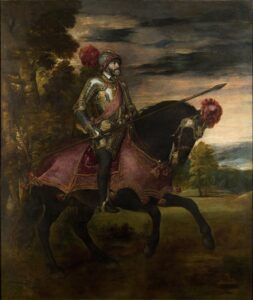
Charles V on Horseback — Titian
Alone in a twilight landscape, clad in his gleaming armour, a long lance in hand, the emperor advances on horseback, sovereign and grave: Titian’s Equestrian Portrait of Charles V at Mühlberg is one of the most famous portraits in the history of art and the birth certificate of the modern equestrian portrait. In a single...
Masterpieces
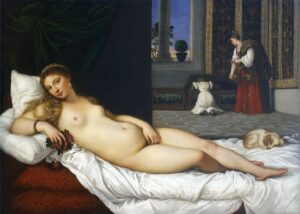
The Venus of Urbino — Titian
A young naked woman, reclining on a bed in a Venetian palace, holds the viewer’s gaze with quiet assurance: Titian’s Venus of Urbino is the most famous nude of the Renaissance and one of the most discussed images in the whole history of art. Through its assumed sensuality, its direct gaze and its composition, it...
Masterpieces
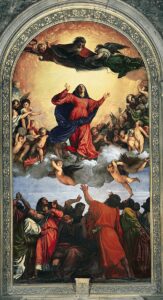
The Assumption of the Virgin — Titian
Above the high altar of one of the largest churches in Venice, an immense altarpiece nearly seven metres high unfolds a celestial vision: the Virgin Mary, borne by a host of angels, rises towards God in a blaze of golden light, while below the apostles, astonished, stretch out their arms towards her. Titian’s Assumption of...

