Picasso-Paris National Museum — The Treasure of the Hôtel Salé
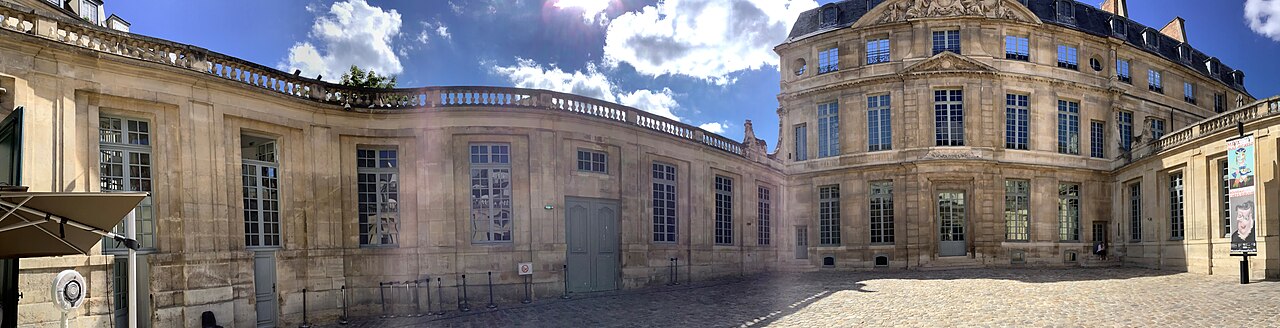
In the heart of the Marais, within one of Paris’s most magnificent 17th-century townhouses, lies the world’s most extensive collection dedicated to a single artist: Pablo Picasso. The Musée National Picasso-Paris houses thousands of works by the Spanish genius in a setting of rare beauty—the Hôtel Salé, a jewel of French Baroque architecture.
This museum is not merely an exhibition space: it is an immersion into the intimate world of creation. Paintings, sculptures, drawings, prints, sketchbooks, as well as Picasso’s personal collection and his archives: everything here reveals the artist at work, in his ceaseless transformations, period after period. Here, visitors can trace the evolution of a body of work that revolutionized 20th-century art, from his earliest youthful canvases to his final bold experiments.
Located on Rue de Thorigny, just a short walk from the Marais’s most charming squares, the museum combines the pleasures of art and architecture in one of Paris’s liveliest and most historic neighborhoods. This article guides you through its collection, its history, its masterpieces, and everything you need to know to plan your visit.
The Picasso Museum at a Glance
| Address | 5 rue de Thorigny, 75003 Paris (Marais) |
| Subway | San Sebastián – Froissart, Saint-Paul, or Chemin Vert |
| Hours | Tue–Sun 9:30 a.m.–6:00 p.m., late-night hours on the first Wednesday of the month, closed Mondays |
| Rates | €16 full price / €12 reduced price — free for those under 18 and on the first Sunday of the month |
| Official Website | museepicassoparis.fr |
Must-See Works
The collection—the world’s most extensive collection dedicated to Pablo Picasso—is displayed at the Hôtel Salé in chronological order. The layout changes regularly; since Picasso’s works are protected by copyright, they are described here but not reproduced.
1. Self-Portrait (1901)
The young Picasso, barely twenty years old, depicts himself with a gaunt, somber face, immersed in the cool blues of his Blue Period, which began after the suicide of his friend Casagemas.
2. Portrait of Dora Maar (1937)
One of the most intense portraits of his photographer partner, featuring a reimagined face and vivid colors, in which the power of Cubism serves to convey emotion.
3. *The Head of a Bull* (1942)
The most famous of his assemblages: a bicycle saddle and handlebars joined together to evoke a bull’s head, a testament to his art of repurposing objects.
4. Portrait of Paul as a Harlequin (1924)
His son Paul, dressed as a harlequin, is painted in a classic, tender style that stands in stark contrast to Cubism—proof that Picasso could do anything.
5. Picasso’s Personal Collection
A collection unique in the world: the works he owned and admired—from Cézanne to Matisse, from Rousseau the Customs Officer to Renoir—which shed light on his art through that of the artists he loved.
The collection at the Musée National Picasso-Paris is the world’s largest dedicated to the artist: more than 5,000 works and tens of thousands of archival items. It spans Picasso’s entire career, encompassing all his techniques, and offers a unique overview of his genius. Since we cannot reproduce them here—they are protected by copyright—here are the must-see works to discover in person.
His early works and those from the Blue Period bear witness to the emergence of his genius. They feature striking self-portraits, in which the young Picasso scrutinizes himself with solemn intensity, as well as melancholic figures bathed in blue, reflecting the spirit of this period marked by poverty and solitude. These works reveal an artist who was already accomplished, even before his major artistic revolutions.
The studies and works related to Cubism constitute a valuable collection. While the seminal painting, *Les Demoiselles d’Avignon*, is housed in New York, the museum possesses major Cubist works and documents that shed light on this revolution. Here, visitors can trace the decomposition of forms, the invention of a new visual language, and the collaborative journey with Braque.
The portraits of his partners are among the highlights of the collection. Picasso painted the women in his life—Olga, Marie-Thérèse, Dora Maar—in works of overwhelming power, at times sensual, at times tormented. The portraits of Dora Maar, in particular, are among the most intense, in which the beloved face is distorted by the emotions and drama of the time.
The sculptures reveal an essential and sometimes overlooked aspect of his genius. Picasso was a sculptor of prodigious inventiveness, and the museum houses an exceptional collection of his works. Visitors can discover ingenious assemblages, such as the famous *Bull’s Head*, composed of a bicycle saddle and handlebars—a testament to his art of repurposing objects. His animal sculptures, figures, and works in metal, plaster, and recycled materials display boundless freedom and imagination.
His late works and variations on the masters reveal an aging but still revolutionary Picasso, engaging with art history and reinterpreting the great masters of the past with undiminished verve. The museum offers a journey through this final period of astonishing creativity.
Finally, one unique collection sets the museum apart: Picasso’s personal collection. The artist owned works by other masters he admired—Cézanne, Matisse, Rousseau, Renoir, Braque, Miró, and others. These paintings, on display at the museum, offer a fascinating glimpse into Picasso’s tastes and sources of inspiration, shedding light on his work through that of the artists he admired.
History of the Building
The museum is housed in the Hôtel Salé, one of the most beautiful private mansions in the Marais, whose eventful history alone makes it worth a visit. To understand this building is to understand a part of Paris’s history.
The hotel was built between 1656 and 1660 for a wealthy financier, Pierre Aubert de Fontenay, who had made his fortune collecting the gabelle—the salt tax. It is to this origin that the building owes its mocking nickname, “Hôtel Salé,” which has stuck with it ever since. Aubert de Fontenay wanted a building to match his fortune: he had one of the most opulent townhouses of his time built, featuring a magnificent grand staircase, sumptuous sculpted decorations, and a majestic courtyard. The complex is a masterpiece of civil architecture from the Grand Siècle, representative of the splendor of the aristocratic residences of the Marais at its peak.
Over the centuries, the building experienced varying fortunes and served many purposes. Among other things, it housed the embassy of the Republic of Venice, and then, in the 19th century, a school—the future École Centrale des Arts et Manufactures, where a generation of engineers was trained. The building later served as a studio for artists before falling into a state of disrepair. Designated a historic monument in 1968, it was saved and restored by the City of Paris, which sought a new purpose for this architectural gem.
In 1985, the Hôtel Salé became the Musée National Picasso, housing the exceptional collection assembled from works donated to the State by the artist’s heirs. The combination of 17th-century Baroque architecture and Picasso’s revolutionary art proved to be a resounding success: the vast rooms, the monumental staircase, and the grand spaces provide an ideal setting for the works. Following a major renovation in the 2010s, which significantly expanded the exhibition spaces, the museum now offers a spacious and well-lit visitor experience befitting its treasures.
How to Visit
The museum spans several floors of the Hôtel Salé, offering a generally chronological tour that traces the major periods of Picasso’s career. This is the best way to appreciate this ever-evolving body of work: by following its progression, one can appreciate the incredible freedom of an artist who never stopped reinventing himself.
Plan on at least two hours for a leisurely visit—and more if you’d like to linger or enjoy the temporary exhibitions, which are always fascinating. The magnificent grand staircase alone is worth a stop. The audio guide, available on site, enriches the visit by providing insight into the works and historical periods.
To avoid crowds, visit in the morning as soon as the museum opens or during the late-night hours on the first Wednesday of the month. We recommend booking a time slot online, especially during school breaks or major exhibitions. Since the museum gets very busy, it’s best to plan ahead.
Practical FAQ
What are the opening hours of the Picasso Museum?
The museum is open Tuesday through Sunday, from 9:30 a.m. to 6:00 p.m. (last admission around 5:15 p.m.). It offers a late-night event on the first Wednesday of the month, with extended evening hours. It is closed on Mondays, as well as on January 1, May 1, and December 25.
How much is the admission fee?
The full price is €16, and the reduced price is €12 (subject to the opening hours of the exhibition spaces). Admission is free for visitors under 18, job seekers, people with disabilities and their companions, as well as for everyone on the first Sunday of each month.
Where is the Picasso Museum located?
The museum is located at 5 Rue de Thorigny, in the 3rd arrondissement, in the heart of the Marais neighborhood. It is accessible via several nearby metro stations, including Saint-Sébastien–Froissart, Saint-Paul, and Chemin Vert.
Do I need to make a reservation in advance?
We strongly recommend booking a time slot online, especially during school breaks, on weekends, and during major temporary exhibitions, to avoid waiting in line.
Is the museum included in the Paris Museum Pass?
Yes, admission to the Musée National Picasso-Paris is included in the Paris Museum Pass, which provides unlimited access to the collection and current exhibitions.
How much time should I set aside for the visit?
Allow about two hours to explore the permanent collection at a leisurely pace, and more if you’d like to visit the temporary exhibitions or fully enjoy the surroundings.
Is it okay to take pictures of the artwork?
Photography policies may vary by gallery and exhibition. We recommend checking with the reception desk; in any case, the use of flash and tripods is generally prohibited.
Around the Museum
The Musée National Picasso-Paris is located in the heart of the Marais, one of Paris’s most charming neighborhoods, where art, history, and the art of living come together. A visit to the museum is the perfect way to explore this exceptional neighborhood.
Just a few steps away, the Place des Vosges—the oldest square in Paris—unfolds with its arcades and garden, surrounded by 17th-century townhouses. The Marais is brimming with other treasures: mansions, boutiques, art galleries, cafés, and restaurants, as well as picturesque alleyways steeped in history. It’s a neighborhood where it’s lovely to stroll after your visit.
Art lovers can extend their tour to other nearby museums—there are several in the Marais and its surroundings. The neighborhood also offers a wonderful opportunity to discover the rich heritage of old Paris, blending architecture, history, and contemporary life. A day in the Marais, centered around the Picasso Museum, is one of the best ways to experience the soul of the capital.
- Also worth checking out— The Grand Palais
- Also worth checking out – The Musée d’Orsay
— M